Granite FAQ
Quick Definition
This granite FAQ answers the most common questions from fabricators and homeowners.
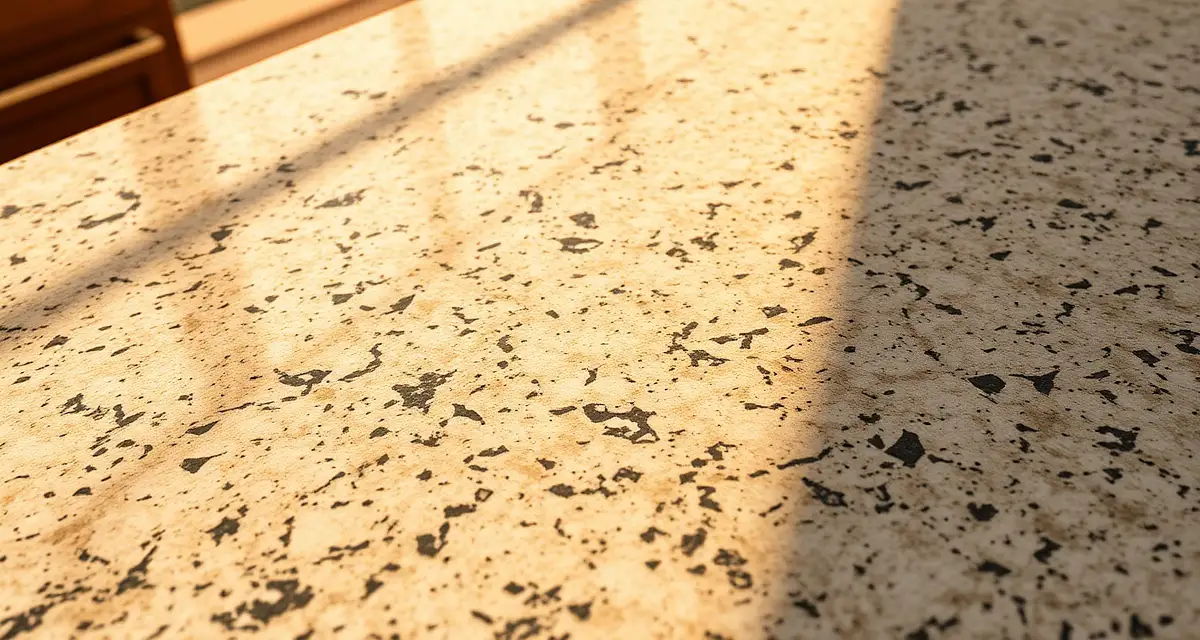
Granite is a natural igneous stone quarried from the earth, valued for countertops because of its hardness, heat resistance, and unique natural beauty. Each slab is one-of-a-kind. Granite holds roughly 25% of the US countertop market and remains the most popular natural stone choice, with hundreds of colors and patterns available from quarries worldwide.
TL;DR
- Granite holds ~25% of the US countertop market - second only to quartz
- Price range: $40-$100 per square foot installed (basic to premium)
- Heat-resistant - one of granite's biggest advantages over quartz
- Needs sealing - typically annually, takes 15 minutes
- Hardness rating: 6-6.5 on the Mohs scale (very scratch-resistant)
- Each slab is unique - customers should select their specific slab when possible
- Granite produces less silica dust than quartz (25-60% silica content vs. 93%)
- Available in hundreds of colors from quarries in Brazil, India, Italy, and beyond
Material Properties
What makes granite different from other countertop stones?
Granite is an igneous rock - formed from cooled magma deep in the earth's crust. This gives it unique characteristics:
Calculate your material waste savings
See exactly how much slab material and money you could save with optimized cutting layouts.
Try the free Waste Calculator- Hardness - 6-6.5 on Mohs scale, harder than marble (3-4) but slightly softer than quartzite (7-8)
- Heat resistance - Excellent. You can place hot pans directly on granite without damage (though thermal shock is theoretically possible with extreme temperature changes)
- Unique patterns - Every slab has natural variation in color, veining, and mineral deposits
- Porosity - Granite is porous (unlike engineered quartz), which means it needs periodic sealing
- UV resistance - Won't fade in sunlight, making it suitable for outdoor use
Is granite durable enough for a kitchen?
Very much so. Granite has been used in residential kitchens for 40+ years with proven performance. It handles the daily abuse of cooking, cleaning, and family use without issue. Specific durability notes:
- Scratch resistance - Kitchen knives won't scratch granite (though you'll dull the knives)
- Chip resistance - Good, but hard impacts on edges can chip. Edge profiles with sharp points (like ogee) are more vulnerable than rounded edges (bullnose)
- Stain resistance - Good when sealed. Without sealing, oils and dark liquids can penetrate
- Heat resistance - Excellent. This is granite's key advantage over quartz
Does granite need to be sealed?
Yes. Granite is naturally porous, and sealing fills those microscopic pores to prevent stain absorption. Here's what you need to know:
- Initial seal - Applied at installation (most fabricators include this)
- Reseal frequency - Every 6-24 months depending on the granite type and usage
- How to test - Place a few drops of water on the surface. If they bead up, the seal is good. If they soak in within 5 minutes, it's time to reseal.
- Process - Apply granite sealer, let it sit for 15-20 minutes, wipe off excess. Takes about 15 minutes for a full kitchen.
- Product cost - $15-$30 for a bottle that covers 200+ sqft
Some very dense granites (like Absolute Black or some Blues) are essentially non-porous and rarely need sealing. Your fabricator can advise based on the specific stone.
Can granite go outside?
Yes. Granite is one of the best materials for outdoor countertops:
- UV-resistant (no fading or degradation from sunlight)
- Freeze-thaw tolerant (when properly sealed)
- Heat-resistant (handles direct sunlight, hot grills)
- Durable against weather exposure
The main consideration for outdoor granite is more frequent sealing (every 6 months) due to exposure to rain, humidity, and temperature swings.
For Fabricators
How does granite fabricate?
Granite is the most forgiving natural stone to fabricate:
| Aspect | Granite Performance |
|---|---|
| Cut speed | Moderate to fast |
| Blade wear | Low to moderate (varies by hardness) |
| Edge finishing | Clean results, good polishing response |
| Breakage risk | Low |
| Seam work | Good - epoxy bonds well to polished surfaces |
| Vein matching | Often needed but less critical than marble |
| Dust (silica content) | Moderate (25-60% crystalline silica) |
Granite is where most fabricators learn their craft because of its relative forgiveness. Mistakes are less costly than with marble or quartzite.
What are the challenges with granite fabrication?
Color variation between slabs - Even within the same quarry lot, granite slabs vary in pattern, color density, and mineral distribution. For multi-slab jobs (large kitchens, commercial projects), selecting slabs from the same bundle minimizes visible differences. SlabWise's slab photo feature helps customers confirm their selections remotely.
Soft minerals - Some granites contain soft mineral inclusions (like mica or feldspar pockets) that can chip during cutting. Experienced fabricators adjust feed rates when they encounter these zones.
Weight - Granite at 3cm thickness weighs approximately 18-19 lbs per square foot. A 50-sqft kitchen counter section weighs roughly 900 lbs. Two-person minimum for all handling; three-person recommended for large pieces.
Vein direction - Many granites have directional veining or flow patterns. Nesting needs to account for this to ensure visual continuity across seamed pieces.
How does granite nesting differ from quartz?
Granite nesting is more constrained than quartz because of:
- Vein direction requirements - Pieces often can't be freely rotated
- Color matching - Pieces from the same job should come from the same slab when possible
- Defect avoidance - Natural fissures and pits need to be worked around
These constraints mean granite nesting typically produces slightly higher waste (10-15%) than quartz (5-8%). However, SlabWise's nesting algorithm still significantly outperforms manual layout by finding multi-job combinations and remnant utilization opportunities that humans miss.
What blade types work best for granite?
Standard diamond segmented blades handle most granites well. Specifics:
| Granite Hardness | Blade Recommendation | Expected Life |
|---|---|---|
| Soft granite (Uba Tuba, etc.) | Standard diamond | 250-350 cuts |
| Medium granite (most colors) | Standard diamond | 200-300 cuts |
| Hard granite (Blue Bahia, etc.) | Premium diamond | 150-200 cuts |
Blade cost per cut for granite is typically the lowest of all stone materials, making it one of the most profitable materials to fabricate.
Customer Questions (for Fabricator Reference)
How much does granite cost?
Granite pricing varies widely based on color and origin:
| Tier | Examples | Installed Price (per sqft) |
|---|---|---|
| Group 1 (Builder grade) | Uba Tuba, Caledonia, Santa Cecilia | $40-$55 |
| Group 2 (Standard) | Colonial White, Giallo Ornamental, White Ice | $55-$70 |
| Group 3 (Premium) | Typhoon Bordeaux, Alaska White, River White | $70-$85 |
| Group 4 (Exotic) | Blue Bahia, Azul Macaubas, Van Gogh | $85-$120+ |
For a typical kitchen (45 sqft), that's $1,800-$5,400+ depending on the tier.
Which granite colors are most popular in 2026?
The trend toward lighter kitchens continues:
- White and light gray - Colonial White, White Ice, Alaska White
- Warm neutrals - River White (gray-white with burgundy), Giallo Ornamental
- Black and dark - Absolute Black (honed or leather), Cosmic Black
- Exotic blues and greens - Blue Bahia, Verde Butterfly (niche but growing)
- Brown/gold tones - Declining but still steady in traditional kitchens
As a fabricator, stock your top 3-4 sellers (likely one white, one black, one warm neutral) and special-order the rest.
Does granite emit radon?
Granite contains trace amounts of naturally occurring radioactive elements that can produce very small amounts of radon gas. However, studies by the EPA and the Marble Institute of America consistently show that radon emissions from granite countertops are negligible - well below any health concern threshold. The radon contribution from granite countertops is thousands of times less than typical radon from soil and air.
Can granite be repaired?
Yes, most damage is repairable:
- Chips - Filled with color-matched epoxy. Most repairs are nearly invisible on busy-pattern granites and slightly visible on solid colors.
- Cracks - Can be epoxied if the crack hasn't separated the pieces. Structural cracks that go through the slab may require section replacement.
- Stains - Most stains can be removed with a poultice (a paste of baking soda and water or a commercial stone poultice). Deep stains in unsealed granite may be permanent.
- Etching - Rare on granite (more of a marble issue). If it occurs, professional honing can remove etch marks.
How long does granite last?
Essentially forever in terms of structural integrity. Granite countertops installed 30-40 years ago are still functional. The main aesthetic changes over time:
- Sealer wears off (requiring reapplication)
- Edge chips from impact (repairable)
- Surface dulling in very high-use areas (polishable)
With basic maintenance (annual sealing, reasonable care), granite countertops will outlast every other component of your kitchen.
Inventory and Sourcing
Where does granite come from?
Major granite-producing countries:
| Country | Notable Colors | Market Share (US imports) |
|---|---|---|
| Brazil | Uba Tuba, Blue Bahia, Giallo | ~40% |
| India | Colonial White, Black Galaxy, Tan Brown | ~30% |
| Italy | Bianco Sardo, Rosa Beta | ~8% |
| China | G603, G654 | ~7% |
| Other (Norway, Africa, US) | Various specialty stones | ~15% |
Lead times for imported granite vary:
- From distributor stock: 3-7 days
- Special order (domestic warehouse): 2-4 weeks
- Direct import from quarry: 8-16 weeks
How should fabricators manage granite inventory?
Granite requires more careful inventory management than quartz because:
- Each slab is unique - Customers select specific slabs, not just colors
- Bundle matching - Multi-slab jobs need slabs from the same bundle for vein consistency
- Defect management - Natural fissures and pits affect usable area
- Photo documentation - Essential for remote slab selection
SlabWise addresses all of these with individual slab profiles including multiple photos, defect notes, bundle tracking, and reservation management. When a customer selects a specific slab through the portal, it's reserved immediately - preventing the frustrating double-sell scenario.
Is granite outdated?
No. Granite market share has stabilized after years of quartz growth. Many homeowners still prefer the natural uniqueness, heat resistance, and proven durability of granite. It's not trending upward, but it's firmly established.
Can I use granite in a bathroom?
Absolutely. Granite is excellent for bathroom vanities, tub surrounds, and shower seats. The lower moisture levels in bathrooms (compared to kitchen cooking activities) make sealing even less of a concern.
What's the difference between polished and honed granite?
Polished has a high-gloss reflective finish. Honed has a matte, smooth finish. Leathered has a textured finish. Honed and leathered granites tend to need sealing more frequently because the surface is less smooth (more microscopic pores exposed).
Does granite stain easily?
Not when properly sealed. Sealed granite is quite stain-resistant. Unsealed granite can absorb oils, wine, and other liquids - especially lighter-colored varieties. Consistent sealing prevents virtually all staining issues.
Can granite crack from heat?
Extremely unlikely under normal use. Granite handles heat better than any other countertop material. Theoretical thermal shock (placing a very hot item on a very cold countertop) is possible but exceptionally rare in practice.
Is granite harder to maintain than quartz?
Slightly. Granite needs annual sealing (15 minutes of your time) while quartz needs nothing. Day-to-day cleaning is identical for both: mild soap and water. The maintenance difference is minor but real.
What edge profiles work best with granite?
All standard edge profiles work well with granite. Popular choices: eased/straight, beveled, half-bullnose, and full-bullnose. Ogee and other ornate profiles work but create thin points that are more vulnerable to chipping.
How do I remove a stain from granite?
For oil-based stains (cooking oil, grease): make a poultice with baking soda and acetone, apply to the stain, cover with plastic wrap, let sit 24-48 hours. For organic stains (coffee, wine): use baking soda and hydrogen peroxide. For water spots: usually resolve on their own as the stone dries. Deep or persistent stains may need professional treatment.
Track Every Granite Slab from Yard to Kitchen
Granite's natural uniqueness makes proper inventory tracking essential. SlabWise gives every slab a digital profile with photos, dimensions, and real-time status - so your customers pick the exact piece they want.
Start your 14-day free trial → No credit card required.
Try These Free Tools
- Nesting Optimizer -- AI-powered slab layout that maximizes yield considering vein direction and defects.
- Defect Mapping -- Upload a slab photo and AI maps every fissure, pit, and color issue.
- Value Engineering -- Find dollar-quantified suggestions to save material without cutting margin.
Sources & Further Reading
- Natural Stone Institute - Natural Stone Care and Maintenance Guide
- National Kitchen & Bath Association - Countertop Selection Guidelines
- ASTM International - Standards for Stone and Countertop Materials
- International Surface Fabricators Association - Countertop Material Properties
Internal Links
- Quartz FAQ - How quartz compares to granite
- Marble FAQ - How marble compares to granite
- Countertop Materials FAQ - All materials side-by-side
- Track Slab Inventory - Slab-level inventory management
- Countertop Care FAQ - Granite care and maintenance