How Often Should You Seal Granite?
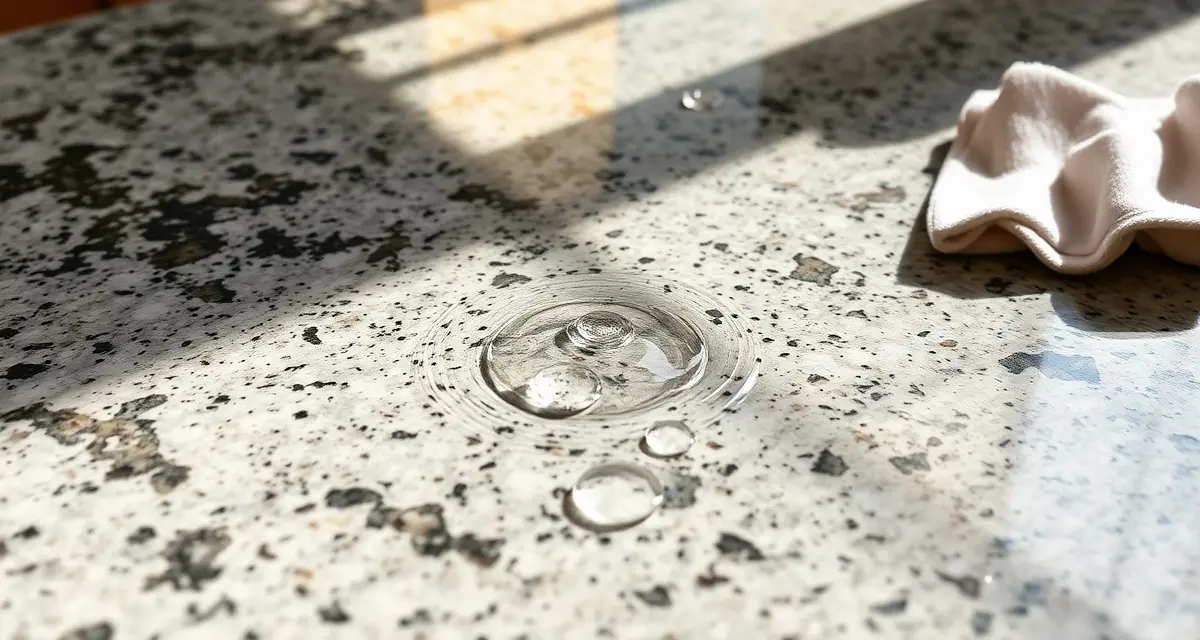
Most granite countertops should be sealed every 1-3 years, depending on the granite's porosity, how heavily the surface is used, and the quality of the sealer applied. The best way to determine if your granite needs resealing is the water test: pour a small amount of water on the surface and wait 10-15 minutes. If the water absorbs and darkens the stone, it's time to reseal. If the water beads up or sits on top, your current sealer is still working.
TL;DR
- Seal granite every 1-3 years based on the water absorption test
- Light-colored, porous granites (like Kashmir White) need sealing more often (annually)
- Dense, dark granites (like Absolute Black) may rarely need sealing or none at all
- The water test is the most reliable way to check if sealing is needed
- Quality impregnating sealers last 3-5 years; budget sealers may last only 6-12 months
- Sealing takes about 30 minutes and costs $15-$40 in materials for an average kitchen
- Over-sealing is wasteful but not harmful; under-sealing risks permanent stains
The Water Test: How to Check Your Sealer
The water test is the industry-standard method for evaluating sealer effectiveness:
Calculate your material waste savings
See exactly how much slab material and money you could save with optimized cutting layouts.
Try the free Waste Calculator- Clean the surface with a pH-neutral stone cleaner and let it dry completely
- Pour a tablespoon of water on the granite in an area that gets heavy use (near the sink or stove)
- Wait 10-15 minutes without touching the water
- Evaluate the result:
| Result | What It Means | Action Needed |
|---|---|---|
| Water beads up completely | Sealer is fully intact | No resealing needed |
| Water sits flat but doesn't absorb | Sealer is adequate | Check again in 6 months |
| Water absorbs slightly (faint darkening) | Sealer is weakening | Reseal within 1-2 months |
| Water absorbs quickly (dark wet mark) | Sealer is depleted | Reseal immediately |
Where to test: Check multiple spots, especially high-traffic areas. The sealer wears faster near the sink (water exposure) and stove (heat exposure) than in corners or less-used sections.
Sealing Frequency by Granite Type
Not all granite is equally porous. The mineral composition and density of your specific granite dramatically affects sealing frequency:
Granite That Needs Frequent Sealing (Every 6-12 Months)
Light-colored, highly porous granites require the most attention:
- Kashmir White
- Colonial White
- River White
- Bianco Romano
- White Dallas
- Most white or cream-colored granites with an open grain structure
These stones have larger mineral pores that absorb liquids faster. Without regular sealing, wine, coffee, and cooking oil can create permanent stains within minutes.
Granite That Needs Standard Sealing (Every 1-3 Years)
Most mid-range granites fall into this category:
- Giallo Ornamental
- Santa Cecilia
- New Venetian Gold
- Tan Brown
- Baltic Brown
- Most gold, brown, and medium-toned granites
Granite That Rarely Needs Sealing (Every 3-5 Years or Never)
Dense, dark granites are naturally less porous:
- Absolute Black
- Black Galaxy
- Black Pearl
- Uba Tuba
- Blue Pearl
Some of these granites are so dense that they pass the water test even without any sealer. Your fabricator can advise whether your specific granite needs sealing at all.
Types of Granite Sealers
Impregnating (Penetrating) Sealers
The industry standard for granite countertops. These sealers soak into the stone's pores and create an invisible barrier below the surface that repels water and oil while allowing the stone to breathe.
- Lifespan: 1-5 years depending on product quality
- Cost: $15-$40 per bottle (covers 100-200 sq ft)
- Application: Spray or wipe on, let penetrate, wipe off excess
- Finish: No change to appearance or feel
- Top products: Tenax Proseal, StoneTech BulletProof, Tuff Duck
Topical Sealers
These sit on the granite's surface rather than penetrating it. They create a visible coating that can look shiny or matte.
- Lifespan: 3-12 months
- Cost: $10-$25 per bottle
- Not recommended for countertops: They wear unevenly, can look cloudy, and trap dirt beneath the coating
- Best for: Floors and exterior stone, not kitchen countertops
Enhanced (Color-Enhancing) Sealers
A subset of impregnating sealers that darken the stone slightly, bringing out the color and pattern. Popular for honed or leathered finishes.
- Lifespan: 1-3 years
- Cost: $20-$50 per bottle
- Effect: Deepens color; makes stone look perpetually "wet"
- Good for: Honed granite that looks washed out or overly pale
How to Seal Granite: Step-by-Step
Sealing granite is a simple DIY task. No professional needed.
Materials needed:
- Impregnating granite sealer ($15-$40)
- pH-neutral stone cleaner ($8-$15)
- Clean microfiber cloths (2-3)
- Spray bottle (if sealer isn't in one)
Process:
-
Clean thoroughly. Remove everything from the countertop. Clean with stone cleaner and water. Remove any existing stains first (a stain sealed into the stone is much harder to remove later).
-
Dry completely. Wait 24 hours after deep cleaning or 2-3 hours after light cleaning. Sealer can't penetrate wet stone.
-
Apply sealer evenly. Spray or pour a thin, even layer across a 3-4 foot section. Don't flood the surface.
-
Let it penetrate. Wait 15-20 minutes (or per product instructions). The sealer needs time to soak into the pores.
-
Apply a second coat (optional for porous granites). For light-colored, porous granite, a second coat after 15-20 minutes provides better protection.
-
Wipe off excess. Use a dry microfiber cloth to buff away all remaining sealer from the surface. This is critical. Leftover sealer creates a hazy film.
-
Cure time. Keep the countertop dry for 24 hours to let the sealer fully cure. No cooking, no water near the surface.
Total time: 30-45 minutes of active work plus 24-hour cure.
Common Sealing Mistakes
Applying sealer to wet granite: The water in the pores blocks sealer penetration, resulting in poor protection and potential haze.
Not wiping off excess: Leftover sealer on the surface dries into a cloudy, sticky film that attracts dirt. Always buff the surface completely dry.
Using the wrong product: Topical sealers create problems on countertops. Always use an impregnating sealer designed for kitchen countertops.
Sealing over stains: Sealing locks stains in. Remove any existing stains with a poultice before applying sealer.
Skipping high-use areas: Focus extra attention on the areas near the sink, stove, and food prep zones. These areas wear through sealer fastest.
Over-applying: More is not better. Excess sealer doesn't absorb and creates buildup. One thin, even coat is usually sufficient for dense granite.
FAQ
Does new granite come sealed? Most fabricators apply an initial sealer before or during installation. However, quality varies. Do the water test 2-4 weeks after installation to verify the sealer is effective. Many homeowners reseal within the first month.
Can you over-seal granite? You can waste product, but over-sealing won't damage granite. If the stone's pores are already full of sealer, additional product simply sits on the surface and gets wiped away. It's wasteful but not harmful.
Does sealing granite change its appearance? Standard impregnating sealers are invisible and don't change the granite's look or feel. Color-enhancing sealers intentionally darken the stone. Always test a sealer in an inconspicuous area first.
Is granite sealing necessary? For most granites, yes. Without a sealer, porous granite can absorb wine, coffee, oil, and other liquids that create permanent stains. Dense dark granites (Absolute Black, Black Galaxy) may not need sealing.
What happens if I never seal my granite? The granite itself will be fine structurally. But it will be vulnerable to staining from common kitchen substances. Wine, coffee, tomato sauce, and cooking oil can all create permanent discoloration on unsealed granite.
Can I use a granite sealer on quartz? No. Quartz countertops are non-porous and don't need sealing. Applying sealer to quartz creates a sticky residue that's difficult to remove.
How do I remove old sealer before resealing? In most cases, you don't need to. Old impregnating sealer wears away naturally, and new sealer fills in the depleted pores. If there's visible sealer buildup from topical products, use a stone-safe stripper first.
Is professional sealing better than DIY? Professional sealers may use higher-grade products, but the application process is simple enough for any homeowner. Paying a professional ($100-$300 for a kitchen) buys convenience more than a better result.
Will sealing prevent etching on granite? No. Sealers protect against stains (absorption), not etching (chemical reaction). Some granites can etch from prolonged acid exposure regardless of sealer. However, most granites are acid-resistant, unlike marble.
Does granite sealer expire? Unopened granite sealer has a shelf life of 3-5 years when stored in a cool, dry place. Once opened, use within 1-2 years for best performance. If the product has separated or smells off, replace it.
Estimate Your Countertop Project
Considering granite for your kitchen? Use our free cost calculator to see material, fabrication, and installation pricing for your specific layout. Granite remains one of the most durable and cost-effective natural stone options.
[Try the SlabWise Cost Calculator →]
Try These Free Tools
- Cost Calculator -- Get instant countertop cost estimates by material, edge profile, and square footage.
- Compare Materials -- Side-by-side material comparison with pricing, durability, and maintenance ratings.
- Edge Profile Selector -- Browse edge profiles with cost impact and visual previews.