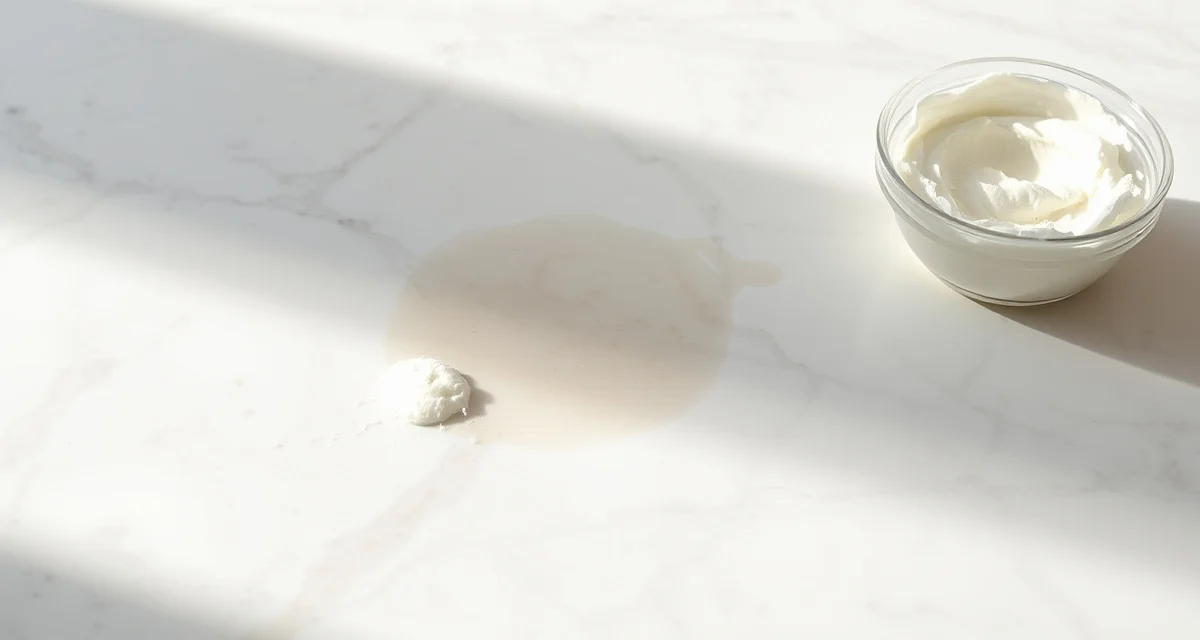
How to Remove Stains from Stone Countertops
Removing stains from stone countertops depends on two things: the type of stain and the type of stone. For natural stone (granite, marble, quartzite), most stains respond to a poultice, a paste of absorbent material and a cleaning agent applied to the surface and left to draw the stain out over 12-24 hours. For quartz (engineered stone), which is non-porous, stains are surface-level and usually wipe away with the right solvent. The faster you treat any stain, the easier it is to remove.
TL;DR
- Act fast: fresh stains are dramatically easier to remove than set-in stains
- Oil-based stains on granite require a poultice with baking soda and acetone
- Wine and coffee stains on granite need hydrogen peroxide poultice
- Quartz stains are surface-level and respond to baking soda paste or rubbing alcohol
- Marble etching (from acid) is not a stain and requires professional re-polishing
- Hard water rings respond to a paste of baking soda and water
- Prevention (sealing granite, wiping spills promptly) is far easier than stain removal
Identify Your Stain Type
Before treating a stain, determine what caused it. The treatment varies significantly by stain category:
Calculate your material waste savings
See exactly how much slab material and money you could save with optimized cutting layouts.
Try the free Waste Calculator| Stain Type | Appearance | Common Causes | Affects |
|---|---|---|---|
| Oil/grease | Dark spot, darkens granite | Cooking oil, butter, cosmetics | Granite, marble, quartzite |
| Organic | Pink, brown, or yellow | Coffee, tea, wine, fruit juice | Granite, marble |
| Rust/metal | Orange or brown ring/spot | Metal cans, iron hardware | Granite, marble, quartzite |
| Water/mineral | White rings or haze | Hard water, mineral deposits | All stone types |
| Ink/dye | Blue, black, or color stain | Markers, newspaper, hair dye | Granite, marble, quartz |
| Etch mark | Light, dull spot (not a stain) | Acid (lemon, vinegar, wine) | Marble, some limestone |
| Paint | Colored spot or drip | Craft paint, wall paint | All surfaces |
Important distinction: On marble, what looks like a stain may actually be an etch mark. Etching is a chemical reaction that removes the polished layer, not a substance absorbed into the stone. Etching requires polishing, not poultice treatment.
The Poultice Method (Natural Stone)
A poultice is the primary stain removal technique for natural stone. It works by drawing the stain out of the stone's pores through capillary action.
Basic Poultice Recipe
Materials:
- Absorbent material: baking soda, flour, diatomaceous earth, or kaolin clay
- Cleaning agent: varies by stain type (see below)
- Plastic wrap
- Painter's tape
Process:
- Clean the stained area with warm water and stone cleaner. Pat dry.
- Mix the poultice to a thick paste consistency (like peanut butter). Use about 1/2 cup of powder to 2-3 tablespoons of liquid.
- Apply the paste over the stain, extending 1/2" beyond the stain's edges. Layer 1/4" to 1/2" thick.
- Cover with plastic wrap and tape the edges to seal.
- Let it work for 12-24 hours. The poultice needs time to dry and draw the stain upward.
- Remove the dried poultice with a plastic scraper.
- Rinse the area with clean water and dry.
- Repeat if needed. Deep stains may require 2-4 poultice applications.
Poultice Formulas by Stain Type
| Stain | Absorbent | Cleaning Agent | Notes |
|---|---|---|---|
| Oil/grease | Baking soda | Acetone or mineral spirits | Most effective on fresh oil stains |
| Coffee/tea | Baking soda | 12% hydrogen peroxide | Safe for light-colored stone only |
| Wine (red) | Baking soda | 12% hydrogen peroxide | Act within 24 hours for best results |
| Rust | Diatomaceous earth | Rust remover (stone-safe) | Do NOT use regular rust removers |
| Ink | Baking soda | Acetone or rubbing alcohol | Test in inconspicuous area first |
| Water marks | Baking soda | Water | Gentle; may need multiple applications |
Hydrogen peroxide warning: Use only on light-colored stone. On dark granite, hydrogen peroxide can lighten the stone color, creating a worse cosmetic issue than the original stain.
Stain Removal for Specific Materials
Granite Stain Removal
Granite is porous (especially light colors) and absorbs liquids when the sealer wears thin. Common scenarios:
Oil stains (most common): Cooking oil dripped near the stove is the #1 granite stain. Fresh oil stains darken the granite temporarily and often evaporate on their own within 24-48 hours as the oil dries. If the stain persists, use a baking soda + acetone poultice.
Wine and coffee: These absorb into unsealed granite within minutes. A hydrogen peroxide poultice (12% solution from a beauty supply store) is most effective. Standard 3% drugstore peroxide works but takes more applications.
Water rings: Dark rings from wet glasses on granite are usually not stains but temporary moisture absorption. They typically disappear when the granite dries completely (place a fan on the area to speed drying). Persistent water marks can be treated with a plain baking soda and water poultice.
Marble Stain Removal
Marble is both porous (absorbs stains) and acid-sensitive (etches from acidic substances). You need to identify which problem you have:
Actual stains (dark spots from absorption): Treat with the poultice method above. Marble responds well to baking soda + acetone for oil and baking soda + hydrogen peroxide for organic stains.
Etch marks (dull, light spots from acid): These are not stains. Lemon juice, vinegar, wine, tomato sauce, and other acidic foods chemically react with marble's calcium carbonate, dissolving the polished surface. Fix with marble polishing powder ($15-$25) applied with a damp cloth in circular motions. Severe etching requires professional re-polishing ($200-$500).
Yellowing: Some white marbles yellow over time due to iron oxidation within the stone. This is a material characteristic, not a stain, and may not be fully removable.
Quartz Stain Removal
Quartz is non-porous, so stains can't penetrate the surface. What looks like a stain on quartz is actually a residue sitting on top:
Dried food and grease: Warm water + dish soap. For stubborn residue, make a paste of baking soda and water, apply, let sit 15 minutes, wipe clean.
Turmeric and strong spices: These are among the few substances that can leave persistent marks on quartz. Clean immediately. For set-in turmeric stains, apply a paste of baking soda and hydrogen peroxide, let sit 1-2 hours.
Permanent marker: Rubbing alcohol on a cloth, rubbed gently. Most marks come off in 2-3 applications.
Paint: Scrape dried paint with a plastic scraper. Remaining residue responds to rubbing alcohol or Goo Gone.
When Home Remedies Don't Work
If the poultice method fails after 3-4 applications, consider professional help:
Stone restoration specialists have access to commercial-grade stain removers, diamond polishing equipment, and experience with difficult stains. Professional stain removal typically costs:
- Simple stain removal: $100-$200
- Full countertop cleaning and re-polishing: $200-$500
- Marble etch repair: $200-$500 depending on severity
- Full kitchen countertop restoration: $500-$1,500
Find specialists through the Natural Stone Institute's directory or ask your original fabricator for recommendations.
Prevention: Easier Than Removal
The best stain strategy is prevention:
For granite:
- Maintain the sealer (test every 6 months, reseal every 1-3 years)
- Wipe up oil and acidic spills within 15 minutes
- Use coasters under glasses
- Place trivets under hot cookware (to protect sealer)
For marble:
- Seal with a quality impregnating sealer
- Never place acidic foods directly on the surface
- Use cutting boards and trivets
- Wipe up spills immediately (marble stains fast)
For quartz:
- Wipe up spills (especially turmeric and food coloring) promptly
- Use cutting boards to prevent surface scratching
- Clean daily with mild dish soap and water
FAQ
How long does it take to remove a granite stain? Fresh stains (under 24 hours old) often require one poultice application of 12-24 hours. Old, deep stains may need 3-5 applications spread over 1-2 weeks. Some very old stains become permanent.
Can I use bleach to remove countertop stains? Diluted bleach can work on organic stains (coffee, wine) on light-colored granite, but it can damage quartz and etch marble. It's not the best first choice for any stone type. Hydrogen peroxide is safer and equally effective.
Will a stain go away on its own? Some do. Oil stains on granite may evaporate as the oil dries (24-72 hours). Water marks disappear when the stone dries completely. But most organic stains (coffee, wine) will not resolve without treatment.
Is an etch mark the same as a stain? No. A stain is a discoloration caused by an absorbed substance. An etch is physical damage to the stone's surface caused by a chemical reaction with acid. Stains are removed with poultices; etches are removed with polishing.
Can professionals remove any stain? Most, but not all. Stains that have been sealed into the stone (by applying sealer over a stain) are extremely difficult to remove. Very old stains (years) in highly porous stone may be permanent. A professional can assess before starting work.
How do I remove a rust stain from granite? Use a stone-safe rust remover (like Tenax Rust Stain Remover) mixed into a poultice. Do not use standard household rust removers (CLR, Iron Out), as they contain acids that can damage granite.
What about beet or berry stains? These are organic stains that respond well to hydrogen peroxide poultice on light granite. On dark stone, use acetone instead. Fresh beet stains come off with dish soap and warm water if caught immediately.
Can I prevent staining without sealing? Not effectively. Sealing is the primary defense against staining for natural stone. Without sealer, even water can temporarily stain granite. The only natural stone that doesn't need sealing is very dense material like Absolute Black granite.
How do I remove adhesive residue from stone? Apply a small amount of acetone or Goo Gone, let sit 2-3 minutes, wipe with a soft cloth. Follow with soap and water to remove solvent residue. This works on all stone types.
Will stain removal damage my countertop finish? When done correctly, no. Poultice applications are gentle and don't affect the polish. However, using abrasive scrubbers, strong acids, or harsh chemicals can damage the surface. Stick to recommended methods for your specific stone type.
Get Your Countertop Quote
Considering new countertops? Use our free cost calculator to compare materials based on durability, maintenance requirements, and pricing for your kitchen layout.
[Try the SlabWise Cost Calculator →]
Try These Free Tools
- Cost Calculator -- Get instant countertop cost estimates by material, edge profile, and square footage.
- Compare Materials -- Side-by-side material comparison with pricing, durability, and maintenance ratings.
- Edge Profile Selector -- Browse edge profiles with cost impact and visual previews.