Remnants FAQ
Quick Definition
This remnants FAQ answers the most common questions from fabricators and homeowners.
A remnant is a leftover piece of stone slab after the primary countertop pieces have been cut. In a typical fabrication shop, 15-35% of every slab becomes remnant material. These pieces range from small offcuts (under 2 sqft) to substantial pieces (10-20+ sqft) that are large enough for bathroom vanities, side tables, hearths, and other small projects. Managing remnants well is a significant profitability factor - well-organized shops sell or reuse 60-80% of remnants, while poorly managed shops throw most of them away.
TL;DR
- The average fabrication shop generates 15-35% waste per slab - much of this becomes remnants
- Usable remnants (4+ sqft) can be sold at 30-60% of full slab price per square foot
- Poor remnant management costs the average shop $2,000-$5,000/month in wasted material
- A 10-slab-per-week shop generates roughly 100-200 sqft of usable remnants weekly
- Best remnant uses: bathroom vanities, laundry room counters, side tables, hearths, shelving
- AI slab nesting reduces remnant creation by 10-15% through better material optimization
- Some shops generate $1,000-$3,000/month in remnant sales with organized inventory
- Remnant inventory tracking is one of the fastest-returning software investments for a fabrication shop
Remnant Basics
What qualifies as a "usable" remnant?
Remnant usefulness depends on size and shape:
Calculate your material waste savings
See exactly how much slab material and money you could save with optimized cutting layouts.
Try the free Waste Calculator| Remnant Size | Typical Uses | Sell Value |
|---|---|---|
| Under 2 sqft | Samples, trivets, cutting boards, craft projects | $0-$20 per piece |
| 2-4 sqft | Small shelves, windowsills, thresholds | $20-$80 per piece |
| 4-8 sqft | Bathroom vanities (single sink), side tables | $80-$250 per piece |
| 8-15 sqft | Bathroom vanities (double), laundry rooms, desks | $200-$600 per piece |
| 15-25 sqft | Small kitchen sections, large vanities, bars | $400-$1,200 per piece |
| 25+ sqft | May function as a partial slab for small kitchen jobs | $600-$2,000+ per piece |
General rule: Anything 4 sqft or larger with a regular shape (roughly rectangular) has meaningful reuse potential. Irregular shapes, thin strips, and small triangles are typically scrap.
How much remnant material does a typical shop produce?
For a shop processing 10 full slabs per week:
| Metric | Amount |
|---|---|
| Slabs processed weekly | 10 |
| Average slab size | 50 sqft |
| Total material processed | 500 sqft/week |
| Average yield (material used) | 70% (350 sqft) |
| Remnant + waste material | 30% (150 sqft) |
| Usable remnants (4+ sqft) | 60-100 sqft/week |
| Scrap (too small to use) | 50-90 sqft/week |
| Monthly usable remnants | 240-400 sqft |
At an average remnant sale price of $30-$50/sqft (for granite and quartz), that's $7,200-$20,000 per month in potential remnant revenue - if you can track, store, and sell the material.
Why do so many shops struggle with remnant management?
Common remnant management problems:
-
No inventory system - Remnants are stacked on A-frames with no record of material type, size, color, or location. When someone needs a remnant, finding the right one requires physically searching through dozens of pieces.
-
Space constraints - Remnants take up A-frame space that full slabs need. Many shops eventually run out of storage and start throwing remnants away to make room.
-
No sales channel - Even shops that keep remnants may not have a way to sell them. Without pricing, photos, and customer-facing inventory, remnants just sit.
-
Breakage in storage - Improperly stored remnants crack, chip, or get damaged. A $300 remnant becomes worthless scrap.
-
Forgotten inventory - Without tracking, remnants that would be perfect for a current job go unused because nobody knows they're there.
Selling Remnants
How do fabricators sell remnant stone?
Sales channels for remnant inventory:
Direct to homeowners:
- In-shop remnant showroom or clearance area
- Website/online inventory with photos and dimensions
- Facebook Marketplace, Craigslist, or local classifieds
- Best for: smaller pieces for bathroom vanities and DIY projects
To other fabricators:
- Fabricator networks and forums
- Regional trade groups
- Best for: larger remnants of popular materials that another shop can use for a job
To contractors and builders:
- Offer remnants for small projects (powder rooms, utility areas)
- Bundle remnant pricing into multi-unit projects
- Best for: moving volume on common materials
To artists and craftspeople:
- Cutting boards, cheese boards, serving trays, coasters
- Smaller pieces that aren't useful for countertops
- Best for: moving small offcuts that would otherwise be scrap
How should remnants be priced?
Remnant pricing guidelines:
| Factor | Pricing Impact |
|---|---|
| Material desirability | High-demand materials (Calacatta marble, popular quartz colors) command 50-70% of slab price per sqft |
| Size | Larger remnants sell closer to full slab price; smaller pieces are deeply discounted |
| Shape | Regular rectangles sell for more than odd shapes |
| Edge condition | Factory-finished edges add value; rough-cut edges reduce price |
| Market supply | If your area has many shops selling remnants, prices are lower |
| Time in inventory | Discount older remnants to move them - storage space has value |
Common pricing formula: Start at 50% of full slab installed price per square foot. Adjust up for rare/premium materials and large sizes. Adjust down for common materials, small sizes, and pieces that have been in inventory over 90 days.
What does a remnant showroom look like?
A well-organized remnant area includes:
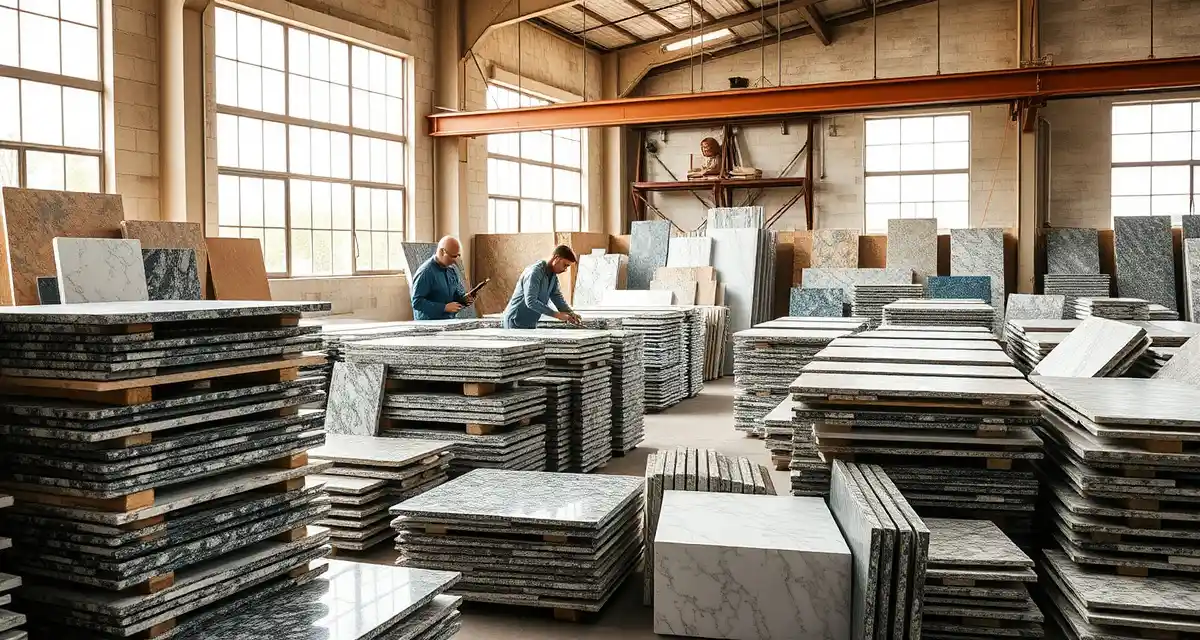
- A-frame racks dedicated to remnants, separate from full slab inventory
- Labels on each piece: material name, dimensions, sqft, price, date received
- Photos posted online (website or social media) with the same information
- Size range organization - group by size category so customers can browse efficiently
- Price tags visible and clear - remnant shoppers are price-sensitive
Some shops designate one day per month as a "remnant sale" event, offering additional discounts to move older inventory and attract foot traffic.
Reducing Remnant Creation
How does better nesting reduce waste and remnants?
Slab nesting is the process of arranging countertop pieces on a slab to maximize material usage. Better nesting = less leftover material = fewer remnants:
| Nesting Approach | Average Yield | Waste/Remnant Rate |
|---|---|---|
| No nesting (cut pieces as they come) | 60-65% | 35-40% |
| Manual nesting by experienced fabricator | 68-75% | 25-32% |
| AI nesting software (SlabWise, others) | 75-85% | 15-25% |
The difference between manual and AI nesting is 7-10 percentage points of yield improvement. On a $2,000 slab, that's $140-$200 in additional usable material - per slab. Over 40 slabs per month, AI nesting saves $5,600-$8,000 in material costs.
AI nesting also produces "better" remnants - fewer oddly-shaped scrap pieces and more regular-shaped remnants that are easier to sell or reuse.
Can remnants from one job be used on another?
Yes, and this is the highest-value use of remnants. If a current job needs a 6 sqft bathroom vanity piece, using a matching remnant from a previous job saves purchasing a full slab. The economics:
- Using a remnant: $0 material cost (already paid for)
- Buying a new slab for 6 sqft: $200-$600 for the slab, 88% waste
- Savings: $200-$600 per occurrence
This requires knowing what remnants you have in inventory - material type, color, dimensions, and condition. Without an inventory tracking system, matching remnants to current jobs relies on memory and luck.
Fabrication software with slab inventory tracking (like SlabWise) records every remnant with dimensions, photos, and material information. When a new job comes in, the system can suggest matching remnants from existing inventory, turning waste into revenue.
Storage and Handling
How should remnants be stored?
Proper remnant storage prevents damage and preserves value:
A-frame storage:
- Store remnants vertically on A-frames, same as full slabs
- Place foam or rubber padding between pieces to prevent scratching
- Group by material type for easy identification
- Don't overload A-frames - remnants at the back become inaccessible
Labeling requirements:
- Material name and color
- Dimensions (length x width)
- Square footage
- Date received
- Source job (if tracking for accounting purposes)
- Price (if for sale)
Environmental protection:
- Keep remnants dry (moisture degrades some sealants and can stain porous stone)
- Indoor storage preferred; outdoor storage needs weather protection
- Keep away from foot traffic and equipment paths to prevent accidental breakage
How long should remnants be kept?
A practical remnant retention policy:
| Remnant Category | Retention Period | Action After |
|---|---|---|
| Premium materials (Calacatta, rare granite) | 12+ months | Deep discount, then donate |
| Popular materials (common quartz, standard granite) | 6-9 months | Progressive discount, then scrap |
| Common materials (entry-level granite, basic quartz) | 3-6 months | Discount heavily, then scrap |
| Small pieces (under 4 sqft) | 1-3 months | Give away or scrap |
| Odd shapes (not usable for countertops) | 1 month | Offer to crafters, then scrap |
Storage space has real cost - both in rent per square foot and in opportunity cost (that space could hold new slabs). Don't let remnants accumulate indefinitely.
Environmental Considerations
What happens to stone that can't be sold as remnants?
Options for stone waste that isn't sold:
- Construction aggregate - Crushed stone waste can be used as fill material or base for construction projects
- Landscaping - Larger scrap pieces make garden stepping stones, edging, or decorative elements
- Recycling programs - Some municipalities and private companies accept stone waste for recycling
- Landfill - The least desirable option. Stone is inert (not toxic), but it takes up landfill space
- Donation - Schools, community organizations, and artists may accept stone offcuts
Is stone waste considered hazardous?
Clean stone waste (without chemical contamination) is generally classified as inert construction and demolition (C&D) waste, not hazardous waste. However:
- Stone slurry (the wet cutting waste) may require special disposal depending on local regulations
- Resin-bonded stone (engineered quartz) may have different classification in some jurisdictions
- Contaminated stone (with sealants, epoxies, or chemicals) may need special handling
Check your local waste management regulations for specific requirements. Most areas allow clean stone offcuts in standard C&D dumpsters.
Can I buy remnant stone directly from a fabricator?
Yes. Many fabrication shops sell remnants directly to homeowners. Call local fabricators and ask if they have a remnant inventory or showroom. Prices are typically 30-60% less than ordering a full slab for the same material. You'll need to be flexible on size, color, and material - remnant selection depends on what's been left over from recent jobs.
Are remnants lower quality than full slabs?
No. Remnants are cut from the same slabs used for full countertop projects. The stone quality is identical. The only difference is size - remnants are smaller, leftover pieces. Some remnants may have edges that are rough-cut (not polished) from the original fabrication, but the fabricator will finish the edges when creating your piece from the remnant.
What is the best use for a 5 sqft remnant?
A 5 sqft remnant is ideal for: a single-sink bathroom vanity top, a small laundry room counter, a fireplace hearth, a side table top, or a decorative shelf. If the shape is roughly rectangular and at least 18" in one dimension, it has practical countertop potential.
How do I find remnant deals near me?
Search "[your city] stone remnants" or "countertop remnants near me" to find local fabricators with remnant inventory. Facebook Marketplace and Craigslist also list remnant stone. Some fabricators post their remnant inventory on their websites with photos and pricing. Visiting shops in person often yields better selection because not all remnants are photographed and listed online.
Can a fabricator match my existing countertop with a remnant?
Possibly. If your existing countertop is a standard material (popular granite or quartz color), there's a reasonable chance a local fabricator has a matching remnant. Natural stone varies by slab, so an exact match isn't guaranteed - even remnants from the same quarry may differ slightly. Engineered quartz is more consistent, making remnant matching easier for standard colors.
How much money can a shop make selling remnants?
Shops with organized remnant programs report $1,000-$3,000+ per month in remnant sales. The key factors are: having enough volume to generate usable remnants, tracking and photographing inventory so it's sellable, and having a sales channel (website, showroom, marketplace listing). Without any of these, remnant revenue is close to zero.
Should I track remnants in my inventory system?
Absolutely. Remnant tracking is one of the highest-ROI activities for a fabrication shop because it turns waste material into revenue with minimal additional investment. Every remnant that sits untracked on an A-frame is money sitting idle. Fabrication management software like SlabWise tracks remnant inventory alongside full slabs, making it easy to match remnants to incoming jobs or list them for sale.
What is the difference between a remnant and a scrap?
A remnant is a leftover piece large enough (typically 4+ sqft) and regular enough in shape to be used for another project. Scrap is material that's too small, too irregular, or too damaged for practical countertop use. The line between remnant and scrap is subjective, but 4 sqft with a roughly rectangular shape is a common industry threshold.
Can remnants be used for outdoor projects?
Yes, if the material is suitable for outdoor use. Granite and quartzite remnants work well for outdoor applications - stepping stones, grill counters, and planter caps. Marble can go outdoors but needs more frequent sealing. Quartz (engineered) should generally stay indoors - UV exposure can discolor the resin over time. Porcelain remnants are excellent outdoors.
How do I dispose of stone remnants I can't sell?
Contact local C&D (construction and demolition) waste haulers for pickup. Many areas have C&D recycling facilities that accept clean stone at lower cost than standard landfill disposal. Some landscaping companies accept stone offcuts for garden projects. Post free offcuts on Facebook Marketplace or Craigslist - crafters and DIY enthusiasts often pick up small stone pieces for free.
Turn Waste Into Revenue
Every remnant that goes into the dumpster instead of onto a bathroom vanity is lost revenue. The difference between a shop that sells 70% of its remnants and one that sells 10% is thousands of dollars per month.
SlabWise's slab inventory tracking records every remnant - dimensions, photos, material type - and helps match remnants to incoming jobs automatically. Combined with AI slab nesting that produces 10-15% better yield (creating fewer and more usable remnants in the first place), your shop extracts maximum value from every slab.
Start your 14-day free trial and start tracking the remnant inventory you're probably throwing away.
Try These Free Tools
- Nesting Optimizer -- AI-powered slab layout that maximizes yield considering vein direction and defects.
- Defect Mapping -- Upload a slab photo and AI maps every fissure, pit, and color issue.
- Value Engineering -- Find dollar-quantified suggestions to save material without cutting margin.
Sources & Further Reading
- Natural Stone Institute - Natural Stone Care and Maintenance Guide
- National Kitchen & Bath Association - Countertop Selection Guidelines
- ASTM International - Standards for Stone and Countertop Materials
- International Surface Fabricators Association - Countertop Material Properties
Internal Links
- Best Remnant Management Software - Tools for tracking and selling remnants
- Slab Inventory Guide - Full inventory management system for fabricators
- Best Slab Nesting Software - Reduce waste before it becomes remnants
- Waste Reduction Case Study - Real results from improved nesting
- Remnant Waste Solutions - Fixing the remnant problem in your shop
- Sell Remnants Use Case - How to build a remnant sales program