The Problem in 60 Seconds
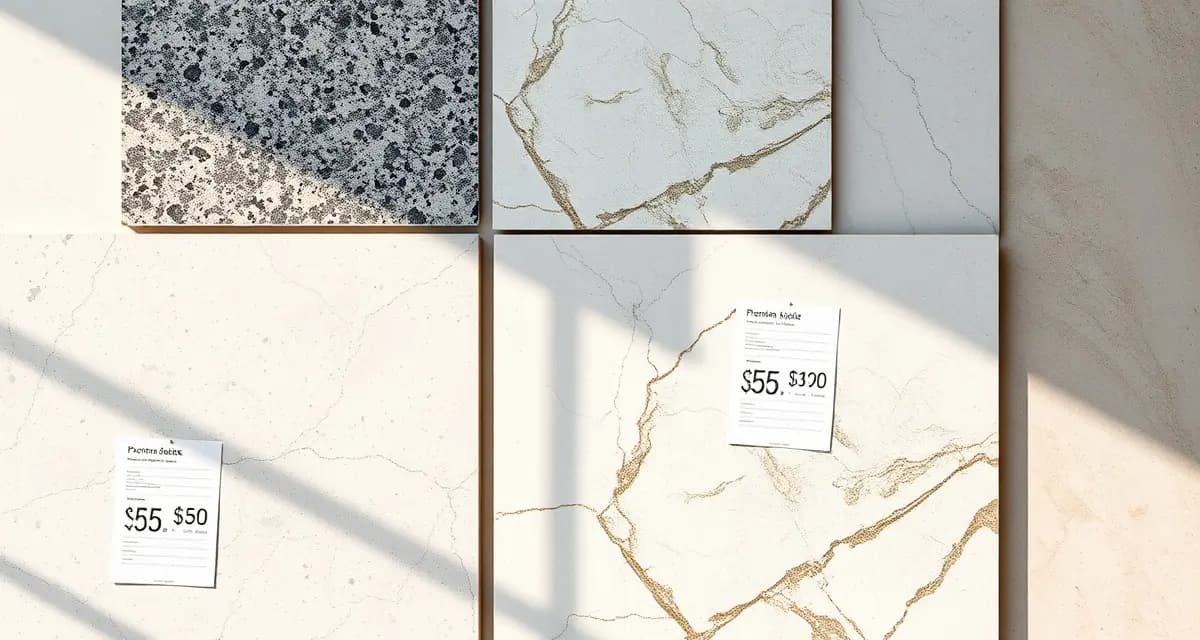
Stone slab prices have climbed 15-30% over the past three years. Shipping costs, tariff uncertainty, quarry consolidation, and increased global demand all push material costs upward. Your margins are shrinking - but raising prices risks losing bids to competitors who haven't adjusted yet (or who are eating the loss). You need a strategy that protects margin without pricing yourself out of the market.
TL;DR - Protecting Your Shop From Material Price Increases
- Stone material costs have risen 15-30% since 2022 across granite, quartz, and marble categories
- Average fabrication shop spends 40-55% of revenue on raw materials - small increases hit hard
- AI slab nesting improves yield by 10-15%, directly offsetting material cost increases
- Reducing remakes (2-4/month at $1,500-$4,000 each) recaptures $3,000-$16,000/month in wasted material
- Tiered pricing (good/better/best) lets customers self-select, protecting your margins on premium materials
- Faster quoting locks in material pricing before distributor increases take effect
- Tracking material cost per job reveals which products still make money and which don't
Why Material Prices Keep Climbing
The Supply Chain Squeeze
Multiple forces are compressing stone material supply and inflating costs:
Calculate your material waste savings
See exactly how much slab material and money you could save with optimized cutting layouts.
Try the free Waste CalculatorQuarry consolidation. Fewer quarry operators control a growing share of production. In natural granite and marble, the top 10 global quarry groups now account for roughly 40% of output. Less competition at the extraction level means less pricing pressure.
Shipping and logistics. Container shipping rates remain elevated compared to pre-2020 levels. A 40-foot container from Brazil or India carrying stone slabs costs $4,000-$8,000 in freight - up from $2,000-$3,500 five years ago. That cost gets distributed across every slab in the container.
Tariffs and trade policy. Ongoing tariff uncertainty on Chinese-manufactured quartz and engineered stone adds 5-25% to landed costs for affected brands. Even when tariffs don't directly apply, the market uncertainty creates pricing volatility.
Demand growth. The U.S. countertop market reached $22.1 billion annually. As more homeowners choose stone over laminate and solid surface, demand outpaces supply growth at certain price points.
What This Means for Your Shop
| Material Category | Price Increase (2022-2026) | Impact on Average Kitchen Job |
|---|---|---|
| Mid-range granite | 12-18% | +$250-$500 per job |
| Premium granite | 15-25% | +$400-$900 per job |
| Quartz (domestic brands) | 10-15% | +$300-$600 per job |
| Quartz (imported/tariff-affected) | 20-30% | +$500-$1,200 per job |
| Marble | 15-22% | +$350-$800 per job |
| Quartzite | 18-28% | +$400-$1,000 per job |
If your shop completes 25-40 jobs per month, material cost increases alone are adding $6,000-$30,000 per month to your expenses. Pass that along entirely, and you risk losing jobs. Absorb it entirely, and you erode your margin to unsustainable levels.
Solution 1: Get More Countertops From Every Slab
The most direct way to offset material cost increases is to extract more usable material from each slab you buy.
Manual vs. AI Nesting
| Factor | Manual Nesting | AI-Powered Nesting |
|---|---|---|
| Average yield | 60-70% | 75-85% |
| Time per layout | 15-30 minutes | Under 1 minute |
| Multi-job optimization | Impractical | Standard feature |
| Remnant tracking | Manual | Automated |
On a slab costing $1,500, improving yield from 65% to 78% extracts an additional $195 in finished product. Across 40 slabs per month, that's $7,800 in additional value - without buying a single extra slab.
AI nesting algorithms consider piece dimensions, grain direction, vein matching, edge requirements, and remnant usability simultaneously. They run thousands of arrangement permutations in seconds, finding layouts that no human could calculate manually in a reasonable time frame.
Remnant Management
Efficient remnant tracking turns waste into inventory. A 20 sq ft remnant from a premium quartzite slab is worth $1,000-$2,000 as a bathroom vanity top. Without tracking, that remnant sits in the yard, gets buried under new slabs, and eventually gets discarded.
Fabrication software that tracks remnant dimensions, material type, and location makes it possible to sell or use remnants before they become waste.
Solution 2: Eliminate Material Wasted on Remakes
Every remake is material purchased twice for one job's revenue. At $1,500-$4,000 per remake and 2-4 remakes per month, you're spending $3,000-$16,000 monthly on material that generates zero revenue.
Where Remakes Come From
| Root Cause | % of Remakes | Prevention |
|---|---|---|
| Template measurement errors | 35-40% | Digital templating + verification software |
| Wrong edge or cutout specification | 20-25% | Template verification + standardized work orders |
| Fabrication errors | 15-20% | CNC processing + QC checks |
| Installation damage | 10-15% | Handling procedures + training |
| Material defects missed pre-cut | 5-10% | Slab inspection protocol |
Template verification software - the 3-layer check that reviews dimensions, edge profiles, and cutout placement before fabrication - addresses 55-65% of remake causes. That alone can save $1,650-$10,400 per month in wasted material.
Solution 3: Adjust Your Pricing Strategy
You can't absorb all material cost increases, and you shouldn't try. But how you pass along increases matters.
The Wrong Way
Raising all prices 15% across the board signals "we're more expensive now" without context. Customers who got a quote 6 months ago at a lower number feel deceived. Contractors who have committed project budgets push back.
The Right Way
Tiered pricing with material-specific adjustments. Different materials have experienced different cost increases. Adjust by category:
- Granite (12-18% increase): Raise quotes 8-12%, absorb the remainder through improved yield
- Quartz (10-30% increase): Raise quotes based on brand-specific cost changes
- Marble and quartzite (15-28% increase): Raise quotes 12-18%, offset the rest through nesting and remnant recovery
Quote expiration dates. Set 30-day expiration on all quotes. This protects you from quoting a price today and having the customer sign 90 days later after your supplier has raised prices.
Price-lock deposits. Offer to lock material pricing for 60 days if the customer places a deposit. This creates urgency and protects your margin.
Good/Better/Best Presentation
When material costs rise, tiered quoting becomes more important. Presenting three options at three price points lets customers self-select based on their budget - and 55-65% choose the middle or upper tier.
| Tier | Material Example | Why It Works |
|---|---|---|
| Good | Luna Pearl granite, $45/sq ft installed | Offers a genuine budget option with solid margins |
| Better | Cambria Quartz, $78/sq ft installed | Mid-range with strong margin; most popular choice |
| Best | Calacatta quartzite, $125/sq ft installed | Premium option that anchors the price range |
The "good" tier might have a thinner margin, but it prevents the customer from walking to a cheaper shop. The "best" tier makes the "better" option feel reasonable. And the "better" tier is where you've built your best margin.
Solution 4: Negotiate Smarter With Distributors
Volume Commitments
If your shop processes 30+ slabs per month, you have negotiating power. Distributors prefer predictable, committed volume over spot purchases. A 6-month volume agreement at a fixed price protects you from mid-year increases and often gets 3-8% below list pricing.
Diversify Suppliers
Don't rely on a single distributor. Maintain relationships with 2-3 suppliers and regularly compare pricing. When one supplier raises prices, you have alternatives. Competition among your suppliers keeps your material costs closer to market floor.
Buy Seasonal Dips
Stone material pricing follows mild seasonal patterns. Distributor inventory peaks in late summer and fall when new container shipments arrive. Buying during peak inventory periods - even for jobs you'll fabricate later - can save 3-5% compared to buying during spring demand spikes.
Solution 5: Track Material Cost Per Job
You can't manage what you don't measure. Track the actual material cost for every completed job:
- Slab cost (prorated for partial slab usage)
- Waste value (material consumed but not installed)
- Remnant value (usable leftover assigned a value)
- Net material cost = slab cost - remnant value
Why This Matters
Without per-job tracking, you might not realize that:
- Your Calacatta quartz jobs break even on material while your Level 1 granite jobs generate 40% material margin
- One specific slab size (e.g., 120" x 65") yields 12% worse than another size (130" x 75") for your typical job mix
- Your Tuesday crew wastes 8% more material than your Thursday crew due to different nesting approaches
This data drives better decisions: which materials to promote, which slab sizes to stock, and where to focus training.
How much have stone material prices increased?
Across all categories, 15-30% since 2022. Quartz affected by tariffs has seen the steepest increases (20-30%). Natural granite has risen 12-18%. Marble and quartzite have climbed 15-28% depending on origin.
Can I pass all material increases to customers?
Partially. Most shops pass 60-80% of increases and absorb the rest through improved efficiency (better yield, fewer remakes). Passing 100% of increases immediately risks losing price-sensitive bids.
How does AI nesting offset material costs?
AI nesting improves slab yield by 10-15%, extracting more finished product from each slab. On 40 slabs per month at $1,500 average cost, a 10% yield improvement saves $6,000/month in material - enough to offset most price increases.
Should I stockpile materials when prices drop?
Only if you have the cash flow, storage space, and predictable demand. Tying up $50,000-$100,000 in slab inventory carries risk (breakage, obsolescence, color discontinuation). A better approach is volume-commitment pricing with your distributor.
How do I explain price increases to customers?
Be direct: "Material costs from our suppliers have increased 12-18% over the past year. We've absorbed a portion of that through efficiency improvements, but our pricing now reflects the updated material costs." Transparency builds trust.
What's the best way to protect margins on quartz?
Track brand-specific cost changes (they vary widely). Promote brands with stable pricing. Use tiered quoting to present options across price points. Improve yield through AI nesting to reduce per-job material cost.
How often should I update my pricing?
Review material costs quarterly. Adjust pricing when material costs shift more than 5%. Set 30-day expiration dates on all quotes to prevent price-lock losses.
Are there alternative materials that save money?
Porcelain slabs offer premium aesthetics at lower material cost ($15-$40/sq ft for the slab vs. $40-$100+ for natural stone). However, porcelain requires specialized tooling and fabrication skill. Some shops are adding porcelain as a competitive option.
Protect Your Margins With Better Data
Material costs will keep rising. The shops that thrive will be the ones that extract maximum value from every slab, eliminate material waste from remakes, and price strategically based on real per-job cost data. SlabWise gives you AI nesting, template verification, and job-level cost tracking in one platform.
Start Your 14-Day Free Trial →
Try These Free Tools
- Cost Calculator -- Get instant countertop cost estimates by material, edge profile, and square footage.
- Compare Materials -- Side-by-side material comparison with pricing, durability, and maintenance ratings.
- Edge Profile Selector -- Browse edge profiles with cost impact and visual previews.
Sources & Further Reading
-
Natural Stone Institute - Stone Installation Guidelines and Best Practices
-
National Kitchen & Bath Association - Countertop Installation Standards
-
International Surface Fabricators Association - Fabrication and Installation Technical Guide
-
Marble Institute of America - Stone Care and Installation Manual