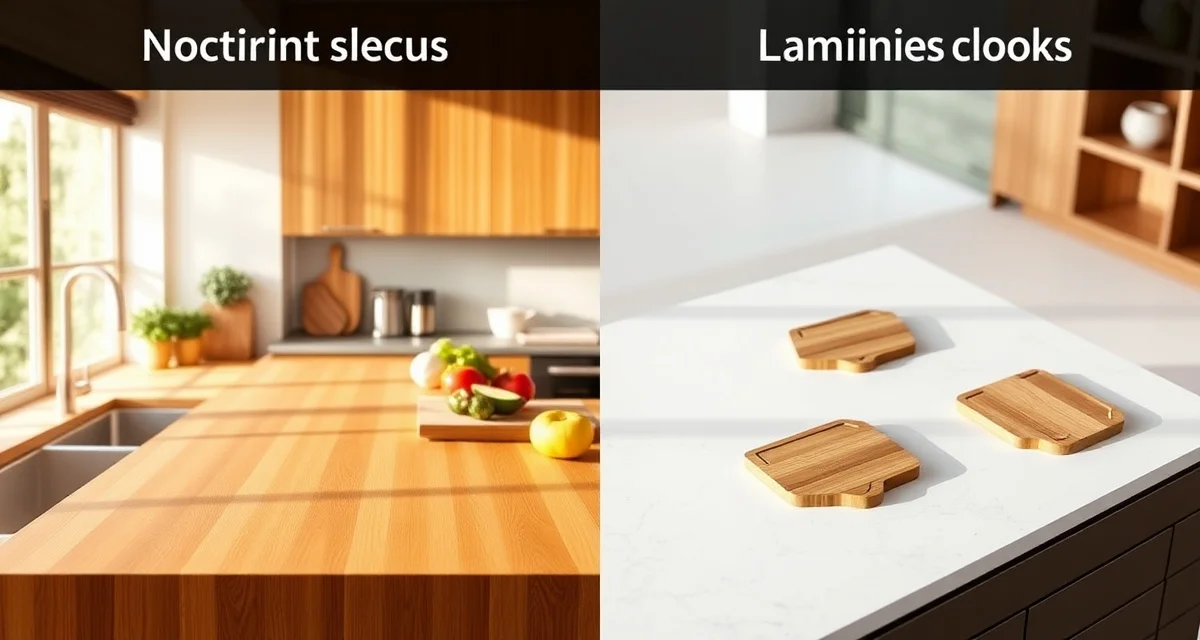
Butcher Block vs Laminate Countertops: 2026 Comparison
Butcher block and laminate are both budget-friendly countertop options, but they could not be more different in character. Laminate is the practical, low-cost default. Butcher block is the warm, natural option that turns a kitchen countertop into a real food-prep surface. Here is how they compare across cost, durability, maintenance, and style.
TL;DR
- Laminate is cheaper: $20-$50/sq ft vs. $30-$70/sq ft for butcher block
- Butcher block is repairable --- sand and refinish when damaged; laminate damage is permanent
- Butcher block requires regular oiling (every 2-4 weeks); laminate needs almost no maintenance
- Laminate handles water better on the surface; butcher block absorbs water and can warp
- Neither handles heat well --- both scorch from hot cookware
- Butcher block is the only countertop you can cut directly on as a food-prep surface
- Butcher block adds warmth and character; laminate is practical but unexciting
- Both can be DIY-installed, making them popular for homeowners on tight budgets
Side-by-Side Comparison
| Feature | Butcher Block | Laminate |
|---|---|---|
| Type | Hardwood (maple, walnut, oak) | Paper/resin layers on particleboard |
| Installed Cost (per sq ft) | $30-$70 | $20-$50 |
| Maintenance | High (oil every 2-4 weeks) | Very Low (wipe and go) |
| Heat Resistance | Low (burns/scorches) | Very Low (blisters/melts) |
| Scratch Resistance | Low (but repairable) | Low (permanent damage) |
| Water Resistance | Low (absorbs, can warp) | Surface only (substrate absorbs) |
| Repairability | Excellent (sand and refinish) | Not repairable |
| Food-Safe Surface | Yes (designed for cutting) | No (use cutting board) |
| DIY Installation | Yes | Yes |
| Warmth/Character | High (natural wood) | Low (manufactured look) |
| Lifespan | 20-40 years (with care) | 10-20 years |
Cost Comparison
Both are budget-friendly, but laminate is cheaper:
Calculate your material waste savings
See exactly how much slab material and money you could save with optimized cutting layouts.
Try the free Waste CalculatorLaminate
- Standard: $20-$35/sq ft installed
- Premium (Formica 180fx): $35-$50/sq ft installed
Butcher Block
- Standard hardwood (maple, oak): $30-$50/sq ft installed
- Premium hardwood (walnut, cherry): $50-$70/sq ft installed
For a 40-square-foot kitchen:
- Laminate: $800-$2,000
- Butcher block: $1,200-$2,800
The savings from choosing laminate range from $400-$800 for a typical kitchen. However, when you factor in butcher block's 20-40 year lifespan (vs. laminate's 10-20 years), the cost-per-year may favor butcher block.
Maintenance: The Decisive Factor
This is the biggest practical difference and likely the factor that decides your choice.
Butcher Block Maintenance (High)
Butcher block is high-maintenance. Expect to:
- Apply food-grade mineral oil every 2-4 weeks (or more often the first few months)
- Wipe up water and spills immediately to prevent absorption and warping
- Sand out scratches, stains, and wear marks with fine-grit sandpaper periodically
- Keep the surface away from standing water --- especially near sinks
- Fully refinish (sand down and re-oil) every 3-5 years
If you enjoy caring for natural materials --- the way people enjoy maintaining leather goods or cast iron cookware --- butcher block maintenance can be satisfying. If you want a surface you never think about, this is not it.
Laminate Maintenance (Very Low)
Laminate is nearly maintenance-free:
- Wipe with a damp cloth and mild soap
- Avoid standing water at seams (substrate can absorb)
- Use a cutting board (knives scratch laminate permanently)
- Use trivets (laminate scorches from heat)
The trade-off: laminate's low maintenance comes with low repairability. Once it is damaged, it stays damaged.
Repairability
Butcher block can be completely renewed. When the surface gets worn, scratched, stained, or even slightly burned:
- Sand with 80-grit, then 120-grit, then 220-grit sandpaper
- Wipe clean and let dry
- Apply 3-4 coats of food-grade mineral oil
- Optional: finish with beeswax/mineral oil blend
The result is a surface that looks brand new. This process can be repeated multiple times over the countertop's lifespan.
Laminate cannot be meaningfully repaired. Scratches are permanent. Burns are permanent. Chips can be filled with repair paste, but the fix is always visible. Water damage (swollen substrate) cannot be reversed.
Water Resistance
Neither material handles water well, but they fail differently:
Laminate has a water-resistant surface layer, but its particleboard substrate is extremely sensitive to moisture. Water that gets through seams, around cutouts, or under edges causes irreversible swelling and bubbling.
Butcher block absorbs water throughout. Standing water can cause swelling, warping, and eventual cracking or mold growth. However, butcher block water damage is often repairable through sanding and re-oiling, unlike laminate's substrate damage.
Both materials need careful attention near sinks and dishwashers.
Heat Resistance
Neither is good with heat:
- Laminate blisters and scorches almost instantly from a hot pan
- Butcher block scorches and burns from hot cookware, leaving dark marks
Butcher block has a slight edge here: burn marks can be sanded out. Laminate burns are permanent.
Always use trivets with both materials.
Aesthetic Appeal
This is where butcher block pulls far ahead.
Butcher block adds genuine warmth, texture, and natural character to a kitchen. The grain patterns, natural color variations, and organic feel create an inviting atmosphere that no manufactured surface can replicate. Butcher block works especially well in:
- Farmhouse and rustic kitchens
- Warm, cottage-style spaces
- Kitchen islands as a contrast to stone perimeter counters
- Baking stations and prep areas
Laminate looks manufactured. Premium options have improved significantly (Formica 180fx is convincing from a distance), but laminate lacks the tactile warmth and visual depth of natural wood. Laminate works in:
- Budget renovations where cost is king
- Rental properties
- Utility spaces (laundry rooms, craft rooms)
- Temporary kitchens with plans to upgrade
Food Prep Function
Butcher block is the only common countertop material designed for direct food preparation:
- Cut directly on the surface (it is literally a cutting board)
- Knead dough on the smooth, cool-enough surface
- Prep vegetables, herbs, and bread without needing a separate board
Knives will mark the surface, but that is expected and repairable. For homeowners who cook frequently and want a true working kitchen surface, butcher block is uniquely functional.
Laminate should always be used with a cutting board. Knives permanently scratch the decorative surface layer.
DIY Installation
Both materials are DIY-friendly, which is part of their appeal for budget renovations:
Butcher block is available in pre-cut sizes from home improvement stores. Installation involves cutting to fit, sealing edges, and securing to cabinets. A competent DIYer with basic tools can handle it in a weekend.
Laminate is available in pre-cut, post-formed pieces that fit standard kitchen layouts. Some cutting may be needed for corners and appliance openings. DIY installation is straightforward with a circular saw and basic skills.
For both materials, sink cutouts and faucet holes require more precision and are worth hiring a professional if you are not confident.
Resale Value
Neither butcher block nor laminate adds significant value to a home sale:
- Butcher block is viewed positively as an accent (especially on kitchen islands) but not as a primary countertop in premium markets
- Laminate is viewed as a material buyers expect to replace --- it can actually detract from a home's perceived value in competitive markets
For resale-focused renovations, investing slightly more in entry-level granite or quartz typically produces better returns.
Best Uses
Choose Butcher Block When:
- You want genuine warmth, character, and natural beauty
- A functional food-prep surface matters
- You are willing to invest time in regular maintenance
- The countertop is a kitchen island or dedicated prep station
- Farmhouse, rustic, or cottage design aesthetic is the goal
Choose Laminate When:
- Budget is the absolute top priority (under $2,000 for the whole kitchen)
- Low maintenance is essential (no oiling, no sanding)
- The project is a rental property or temporary kitchen
- You plan to upgrade countertops in the future
- Utility areas or secondary spaces where premium materials are not needed
Is butcher block more durable than laminate?
Butcher block is softer and scratches more easily, but it lasts longer (20-40 years vs. 10-20 for laminate) because it can be sanded and refinished. Laminate's surface is more durable initially but cannot be repaired when damage occurs.
Can you use butcher block near a sink?
You can, but it is the highest-risk area for water damage. Apply extra mineral oil, wipe up water immediately, and maintain the finish carefully. Some homeowners avoid placing butcher block near sinks entirely.
Is laminate still used in 2026?
Yes. Laminate remains the most installed budget countertop material in the U.S. Modern premium laminates look significantly better than older versions, and the price point is unmatched for cost-sensitive projects.
What wood is best for butcher block?
Hard maple is the most popular choice: tight-grained, light-colored, durable, and food-safe. Walnut is popular for its dark, rich appearance. Cherry, oak, and teak are also used. Avoid softwoods like pine.
Can you combine butcher block and laminate in one kitchen?
You can, but the aesthetic mismatch may be jarring. Butcher block pairs better with stone (granite or quartz) on perimeter counters. Laminate is typically used alone or as a temporary placeholder.
Does butcher block harbor bacteria?
Wood has natural antimicrobial properties. Research shows bacteria die faster on wood than on plastic surfaces. Regular cleaning, oiling, and periodic sanding keep butcher block sanitary for food prep.
How long before laminate needs replacing?
Laminate typically lasts 10-20 years depending on use. Heavily used kitchens may see laminate wear out in 8-10 years (edge lifting, surface scratches, water damage). Lightly used spaces can push 20 years.
Can I install either material myself?
Yes. Both butcher block and laminate are DIY-friendly. Pre-cut options from home improvement stores make installation accessible for handy homeowners with basic tools.
Choose Your Budget-Friendly Surface
Butcher block brings warmth and natural beauty to your kitchen at a reasonable price --- if you are willing to maintain it. Laminate delivers bare-bones practicality at the lowest possible cost. Both have their place, and the right choice depends on your lifestyle, design goals, and time commitment.
Get a cost estimate with our countertop cost calculator. Fabricators can try SlabWise free for 14 days to quote every material type quickly.
Try These Free Tools
- Cost Calculator -- Compare material costs instantly across different countertop options.
- Compare Materials -- Side-by-side material comparison with pricing, durability, and maintenance.
- Kitchen Visualizer -- Let customers preview countertop materials in their actual kitchen.
Sources & Further Reading
-
Natural Stone Institute - Technology and Software Solutions for Stone Fabricators
-
International Surface Fabricators Association - Fabrication Software and Digital Tools
-
National Kitchen & Bath Association - Technology Integration in Countertop Design
-
Marble Institute of America - Digital Fabrication and Software Standards