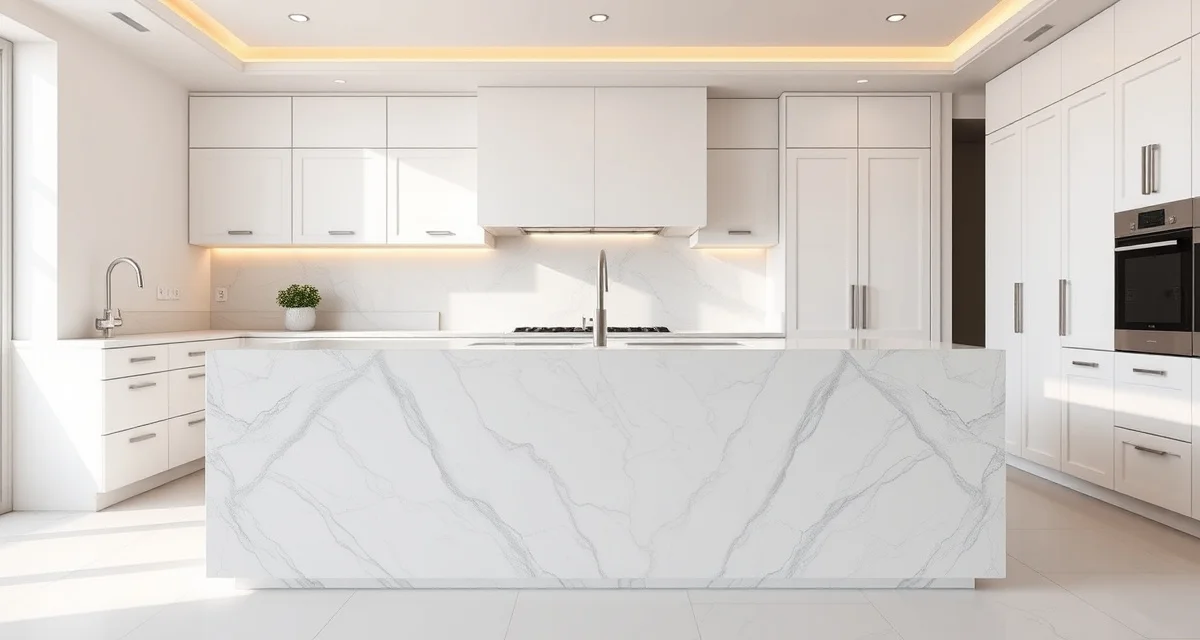
How Much Does Waterfall Edge Cost in 2026?
A waterfall edge countertop costs between $1,200 and $6,000+ beyond the base countertop price, depending on material, number of waterfall sides, and fabrication complexity. The waterfall itself -- where the countertop material continues vertically down one or both sides of a cabinet or island -- adds roughly $800 to $2,500 per side in extra material and labor. Quartz waterfall edges average $1,000 to $1,800 per side, while marble waterfalls can reach $2,500+ per panel.
TL;DR: Waterfall Edge Cost Summary
- Single waterfall side (quartz): $800 - $1,800 added cost
- Single waterfall side (marble): $1,200 - $2,500 added cost
- Double waterfall (both sides): $1,600 - $5,000+ added cost
- Miter joint labor: $300 - $800 per joint
- Additional slab material: 15 - 30 sq ft per waterfall side
- Full waterfall island (quartz, 8 ft): $4,500 - $9,000 total
- Full waterfall island (marble, 8 ft): $6,000 - $14,000 total
What Is a Waterfall Edge Countertop?
A waterfall edge is a design feature where the countertop material flows over the edge of a cabinet or island and continues down to the floor, creating an unbroken vertical panel. Unlike a standard countertop that terminates at the cabinet edge with a finished profile (bullnose, eased, etc.), a waterfall wraps the material downward.
Calculate your material waste savings
See exactly how much slab material and money you could save with optimized cutting layouts.
Try the free Waste CalculatorThe two main configurations:
- Single waterfall: Material cascades down one side of the island or peninsula
- Double waterfall: Material drops down both ends, fully encasing the island sides
The joint where the horizontal countertop meets the vertical panel is called a miter joint, and it's one of the most demanding fabrication tasks in the countertop industry. The quality of this joint makes or breaks the entire look.
Waterfall Edge Cost by Material
The material you choose has the biggest impact on total waterfall cost. Waterfall panels require significantly more material than a standard edge treatment, and harder materials require more labor to miter cleanly.
| Material | Cost per Sq Ft | Single Waterfall Side (Approx. 15 sq ft) | Double Waterfall (Approx. 30 sq ft) | Miter Joint Cost |
|---|---|---|---|---|
| Quartz | $55 - $130 | $800 - $1,800 | $1,600 - $3,600 | $300 - $600 |
| Granite | $50 - $120 | $750 - $1,700 | $1,500 - $3,400 | $400 - $700 |
| Marble | $75 - $200 | $1,100 - $2,500 | $2,200 - $5,000 | $400 - $800 |
| Quartzite | $80 - $200 | $1,200 - $2,500 | $2,400 - $5,000 | $500 - $800 |
| Porcelain Slab | $50 - $100 | $750 - $1,500 | $1,500 - $3,000 | $350 - $650 |
| Concrete | $65 - $135 | $975 - $2,000 | $1,950 - $4,000 | $250 - $500 |
Important: These costs are in addition to the horizontal countertop surface cost. A complete waterfall island includes the top surface plus the waterfall panel(s).
Full Waterfall Island Cost: Complete Pricing
Here's what a complete waterfall island costs, including the top surface and waterfall panels, for a standard 8-foot island (96" x 36"):
| Configuration | Quartz (Mid-Range) | Granite (Mid-Range) | Marble (Calacatta) |
|---|---|---|---|
| Island top only (no waterfall) | $2,400 - $4,200 | $2,200 - $3,800 | $3,500 - $6,400 |
| Top + single waterfall | $3,500 - $6,500 | $3,200 - $6,000 | $5,000 - $9,500 |
| Top + double waterfall | $4,500 - $9,000 | $4,200 - $8,500 | $6,500 - $14,000 |
These ranges include material, fabrication, miter joints, and installation. Exotic materials, complex vein matching, and multi-slab projects push toward the higher end.
Why Waterfall Edges Cost So Much: The Fabrication Reality
Waterfall edges aren't just "more material." They're more of everything:
1. Extra Slab Material
A waterfall panel for a 36-inch-tall island (standard counter height of 36") with a 24-inch-deep countertop requires approximately 6 to 9 square feet of material per panel for the vertical piece alone. But because the fabricator needs to match the grain or veining direction, the actual slab consumption is often 12 to 18 square feet per side due to waste and pattern matching.
2. Vein Matching
On materials with prominent veining (marble, some quartzites, and veined quartz), the horizontal and vertical pieces must align at the miter joint so the pattern appears to flow continuously. This requires:
- Cutting both pieces from the same slab
- Precise orientation planning
- Extra material for test cuts and adjustments
Vein-matched waterfall joints add $200 to $600 to the fabrication cost compared to non-matched joints.
3. Miter Joint Fabrication
The 45-degree miter cut where horizontal meets vertical is technically demanding. Both pieces must be cut at exactly 45 degrees, polished to a mirror finish on the cut face, and bonded with color-matched epoxy. A visible seam line at the miter is a sign of poor fabrication.
Miter joint labor runs $300 to $800 per joint, and a double waterfall has two joints.
4. Installation Complexity
Waterfall panels are heavy, fragile during transport, and difficult to align perfectly during installation. Most installers use suction cup lifters and temporary bracing. Installation of a waterfall panel takes 2 to 4 hours per side versus 30 to 60 minutes for a standard island end panel.
Waterfall Edge vs. Other Premium Edge Treatments
How does the waterfall compare cost-wise to other high-end edge options?
| Edge Treatment | Added Cost (8 ft island) | Visual Impact | Fabrication Difficulty |
|---|---|---|---|
| Eased (standard) | $0 | Minimal | Low |
| Ogee | $150 - $300 | Moderate | Low-Medium |
| Dupont | $200 - $400 | Moderate | Medium |
| Laminated (doubled thickness) | $400 - $1,000 | High | Medium |
| Single Waterfall | $800 - $2,500 | Very High | High |
| Double Waterfall | $1,600 - $5,000+ | Very High | High |
The waterfall edge costs 3 to 10 times more than standard edge profiles but creates a dramatically different look. For homeowners willing to invest, it's the single most impactful design choice on a kitchen island.
How Fabricators Can Improve Waterfall Profitability
Waterfall projects are high-revenue but high-risk jobs for fabrication shops. Here's where the money gets lost -- and how to fix it:
Slab Waste
Waterfall cuts require careful planning. A poorly nested waterfall job can waste 25-30% of a premium slab. AI-powered nesting software like SlabWise's Slab Nesting tool optimizes cut patterns to reduce waste by 10-15%, which on a $3,500 marble slab can save $350 to $525 per project.
Template Errors
A miter joint that doesn't align properly means a remake. On a waterfall job with Calacatta marble, a single remake costs $2,000 to $4,000+ in wasted material alone -- not counting labor. SlabWise's AI Template Verification runs a 3-layer check on every template to catch dimensional errors, sink placement issues, and edge conflicts before the slab is cut.
Quoting Accuracy
Waterfall jobs are the most commonly under-quoted projects in the countertop industry. Fabricators forget to account for vein matching waste, extra miter labor, or installation time. SlabWise's Quick Quote system factors in waterfall-specific variables to produce accurate quotes in 3 minutes instead of 20.
Waterfall Edge Design Considerations
Bookmatching
Bookmatched waterfall edges use adjacent pieces from the same slab, flipped like pages of a book, so the vein pattern mirrors at the joint. This premium technique adds $500 to $1,500 to the project but creates a striking symmetrical design.
Thickness Options
Standard countertop thickness is 3 cm (about 1.18 inches). Waterfall panels at 3 cm look proportional on most islands. Thinner 2 cm material is sometimes used for the vertical panel to reduce weight and cost, but the transition from 3 cm to 2 cm requires additional miter work.
Waterfall to Floor vs. Waterfall to Kick
- Floor-length waterfall: Material extends to the floor. Most dramatic look. Full panel height is typically 34 to 36 inches. Costs more material.
- Kick-height waterfall: Material stops 4 inches above the floor with a recessed toe kick. Slightly less material needed. Saves $50 to $150 per side.
How much does a waterfall edge add to countertop cost?
A single waterfall side adds $800 to $2,500 to your countertop cost, depending on material. Double waterfalls add $1,600 to $5,000+. This includes extra slab material, miter joint fabrication, and installation labor.
Is a waterfall edge worth the cost?
Waterfall edges increase kitchen resale appeal and are consistently rated as one of the most desirable kitchen features by real estate professionals. For homeowners planning to stay in their home, it's a design preference. For resale, waterfall islands in premium materials typically return 60-75% of their cost.
Can any countertop material be made into a waterfall?
Most stone and engineered materials can be fabricated as waterfalls, including quartz, granite, marble, quartzite, porcelain slab, and concrete. Laminate and solid surface can also be used but are less common for this treatment. Materials with prominent veining show the most dramatic results.
How long does waterfall edge fabrication take?
Waterfall projects typically add 3 to 7 business days to the fabrication timeline compared to standard countertops. Total lead time from templating to installation is usually 10 to 20 business days for waterfall jobs.
Can you see the seam on a waterfall edge?
On a well-fabricated miter joint, the seam is nearly invisible. A thin line of color-matched epoxy fills the joint. On patterned materials with proper vein matching, most people can't identify the seam location. Poor fabrication, however, results in visible gaps or misaligned patterns.
Does a waterfall edge need support?
Yes. The vertical panel is bonded to the horizontal surface at the miter joint and typically supported by the cabinet structure, metal brackets, or a plywood substrate behind the panel. Proper structural support prevents the joint from separating over time.
How thick should a waterfall countertop be?
Standard 3 cm thickness works for both the horizontal and vertical surfaces. Some designers use 2 cm for the vertical panel to reduce weight. Laminated edges (two pieces bonded to create a 6 cm look) are a premium option that costs $400 to $1,000 extra.
What's the difference between a waterfall and a mitered edge?
A mitered edge uses the same 45-degree joint technique but only creates a thicker appearance at the countertop edge (laminated look). A waterfall extends that mitered piece all the way down to the floor or toe kick as a full panel.
Can I add a waterfall edge to an existing island?
Yes, but it requires removing the existing countertop, refabricating the top with the miter cut, and creating the matching vertical panel. It's typically more cost-effective to include the waterfall in the original fabrication. Retrofit waterfall additions cost 20-30% more than original installations.
How do I clean a waterfall edge?
Clean the same way as your horizontal countertop surface. The vertical panel collects less food debris but more fingerprints and splash marks. Use the cleaning method recommended for your specific material.
Get Accurate Waterfall Edge Quotes in Minutes
Waterfall jobs are too valuable to lose to bad quotes. SlabWise's Quick Quote generates precise waterfall countertop estimates in under 3 minutes, including miter joint labor, vein matching waste, and installation complexity. Pair it with AI Slab Nesting to minimize waste on expensive slabs and protect your margins.
Start Your 14-Day Free Trial -- Plans from $199/month
Try These Free Tools
- Cost Calculator -- Get instant countertop cost estimates by material, edge profile, and square footage.
- Compare Materials -- Side-by-side material comparison with pricing, durability, and maintenance ratings.
- Edge Profile Selector -- Browse edge profiles with cost impact and visual previews.