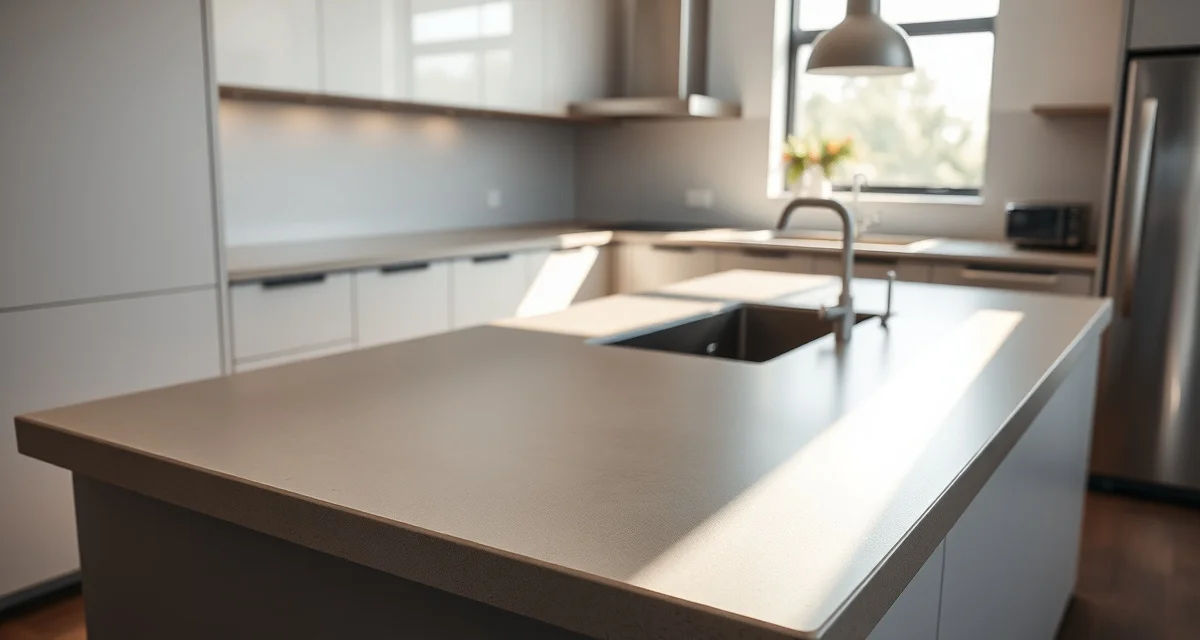
How Much Do Concrete Countertops Cost in 2026?
Concrete countertops cost $65-$135 per square foot professionally installed or $10-$30 per square foot for a DIY project in 2026. For a typical 40 sq ft kitchen, that translates to $2,600-$5,400 with a professional or $400-$1,200 doing it yourself. Concrete is one of the most customizable countertop materials available -- you control the color, shape, texture, and embedded details -- but that customization comes with significant weight, maintenance, and cracking considerations.
TL;DR: Concrete Countertop Cost at a Glance
- DIY materials only: $10-$30 per sq ft (mix, reinforcement, forms, sealer)
- Professional installation: $65-$135 per sq ft (design, fabrication, delivery, installation)
- Average kitchen DIY (40 sq ft): $400-$1,200 total
- Average kitchen professional (40 sq ft): $2,600-$5,400 total
- Cast-in-place: $65-$100/sq ft professional (poured on-site in your kitchen)
- Precast: $75-$135/sq ft professional (built in a shop, delivered as finished slabs)
- Lifespan: 20-50+ years with proper sealing and maintenance
- Weight: 18-25 lbs per sq ft at 1.5 inch thickness (plan for structural support)
What Are Concrete Countertops?
Concrete countertops are custom-poured surfaces made from a mix of Portland cement, sand, aggregate, water, and often fiber reinforcement or additives. Unlike the gray sidewalk concrete you might be picturing, modern concrete countertops use specialized mixes, integral pigments, and finishing techniques to create surfaces that range from smooth and polished to textured and rustic.
Calculate your material waste savings
See exactly how much slab material and money you could save with optimized cutting layouts.
Try the free Waste CalculatorThere are two primary fabrication methods:
Cast-in-Place Concrete Countertops
Poured directly on top of your cabinets using temporary forms. The concrete cures in your kitchen, then gets ground, polished, and sealed. Cost: $65-$100/sq ft professional.
Pros: No seams, easier for complex shapes, no transportation risk. Cons: Messy process (concrete dust and wet mix in your kitchen for days), less control over finishing, harder to achieve a perfectly smooth surface.
Precast Concrete Countertops
Fabricated in a shop on precision forms, cured under controlled conditions, then transported and installed as finished slabs. Cost: $75-$135/sq ft professional.
Pros: Better quality control, smoother finishes, can include embedded objects, shop environment allows more experimentation. Cons: Seams where pieces join, transportation can cause cracking, limited by what fits through your door.
Concrete Countertop Cost Breakdown: DIY
DIY concrete countertops are a legitimate project for experienced DIYers, but the learning curve is steep. Here is what you will spend on materials for a 40 sq ft kitchen.
| Component | Cost | Notes |
|---|---|---|
| Concrete countertop mix (bags) | $120-$250 | Specialty mix like Buddy Rhodes, Quikrete Countertop, or CHENG Pro |
| Melamine forms | $40-$80 | For precast method; reusable for multiple pours |
| Fiber mesh reinforcement | $15-$30 | Polypropylene or fiberglass fibers |
| Steel or fiberglass rebar/wire | $20-$40 | For structural reinforcement in spans over 24 inches |
| Integral pigment/colorant | $20-$50 | Liquid or powder color mixed into concrete |
| Concrete sealer | $40-$80 | Penetrating sealer + topcoat (food-safe) |
| Sandpaper/polishing pads | $30-$60 | Progressive grits from 50 to 3000 |
| Mixing tools | $20-$40 | Drill mixer, buckets, trowels |
| Sink knockout/faucet forms | $15-$30 | Pre-made foam forms for cutouts |
| Orbital sander or polisher | $50-$120 | Rental or purchase for wet polishing |
| Total DIY materials | $370-$780 | ~$10-$20 per sq ft |
Additional DIY Costs
- Concrete vibrator ($30-$60 rental): Removes air bubbles from the pour, critical for a smooth surface
- Cabinet reinforcement ($50-$200): Standard cabinets may need additional support for the weight
- Extra mix for mistakes ($40-$80): Plan for at least one section that needs repouring
- Time investment: 7-14 days including form building, pouring, curing, grinding, polishing, and sealing
Concrete Countertop Cost Breakdown: Professional
Professional concrete countertop fabrication is a specialty trade. Not every countertop fabricator works with concrete -- you will need to find a dedicated concrete artisan or shop. Here is how the costs break down.
| Component | Cost/sq ft | Notes |
|---|---|---|
| Design and templating | $5-$15 | Custom shape, edge profile, color selection |
| Materials (mix, reinforcement, pigment) | $8-$15 | Commercial-grade countertop mix |
| Form building | $10-$20 | Custom melamine or rubber forms |
| Pouring and curing | $10-$20 | Includes vibration, screeding, initial cure |
| Grinding and polishing | $10-$20 | Progressive diamond polishing to desired finish |
| Sealing | $5-$10 | Multiple coats of penetrating + topical sealer |
| Transportation (precast) | $5-$15 | Heavy pieces require careful transport |
| Installation | $10-$20 | Placement, leveling, caulking |
| Total professional | $65-$135/sq ft | $2,600-$5,400 for 40 sq ft kitchen |
Premium Concrete Countertop Add-Ons
| Feature | Added Cost/sq ft | Description |
|---|---|---|
| GFRC (Glass Fiber Reinforced Concrete) | +$10-$20 | Lighter, thinner, stronger than standard concrete |
| Embedded objects (glass, shells, stone) | +$5-$15 | Decorative elements cast into the surface |
| Integral drain board | +$10-$25 | Channels molded into the surface near sink |
| Live edge or irregular shape | +$15-$30 | Non-rectangular custom forms |
| Veining (faux marble effect) | +$10-$20 | Multi-color technique mimicking natural stone |
| Integrated sink (same concrete) | +$500-$1,500 flat | Sink basin formed from the same pour |
Concrete Countertops: Pros and Cons
Advantages
- Fully customizable: Any shape, color, texture, edge profile, or embedded detail is possible
- Heat resistant: Concrete handles hot pots and pans without damage (unlike epoxy, laminate, or solid surface)
- Unique appearance: No two concrete countertops look identical. The natural variation and handcrafted quality appeal to many homeowners
- Durable structure: A properly reinforced concrete countertop can last 50+ years
- Repairable: Scratches and minor chips can be filled and re-sealed
- Sustainable: Made from abundant natural materials with low embodied energy compared to engineered stone
- Can include integrated features: Trivets, drain boards, soap dishes, and sinks can be formed directly into the countertop
Disadvantages
- Heavy: At 18-25 lbs per sq ft (1.5 inch thick), a 40 sq ft kitchen countertop weighs 720-1,000 lbs. Cabinets may need reinforcement
- Can crack: Concrete shrinks as it cures and moves with temperature changes. Hairline cracks are common and considered character by some, defects by others
- Requires regular sealing: Most concrete countertops need resealing every 1-3 years to maintain stain resistance. Unsealed concrete stains instantly
- Stain-prone without sealer: Wine, oil, lemon juice, and coffee can penetrate even sealed concrete if left sitting
- Porous: More susceptible to bacteria growth than non-porous materials like quartz unless properly sealed and maintained
- Long lead time: Professional concrete countertops take 3-6 weeks from design to installation (curing alone is 28 days for full strength)
- Limited fabricators: Far fewer concrete countertop specialists than granite or quartz fabricators
Thickness and Weight Considerations
| Thickness | Weight/sq ft | Best For | Notes |
|---|---|---|---|
| 1 inch (standard GFRC) | 10-13 lbs | Most applications | Requires glass fiber reinforced mix |
| 1.5 inches (standard) | 18-20 lbs | Kitchen countertops | Most common residential thickness |
| 2 inches (heavy duty) | 22-25 lbs | Commercial, outdoor | Maximum durability, very heavy |
| 3 inches (butcher style) | 35-38 lbs | Statement pieces, islands | Requires steel reinforcement and cabinet upgrades |
A standard 40 sq ft kitchen at 1.5 inch thickness weighs approximately 750 lbs. Standard kitchen cabinets are rated for roughly 500 lbs of countertop weight. You will likely need to add plywood reinforcement or additional support legs, which costs $100-$400.
Concrete vs. Other Countertop Materials: Price Comparison
| Material | Cost/sq ft Installed | Maintenance | Durability | Weight | Customization |
|---|---|---|---|---|---|
| Laminate | $15-$40 | Low | Fair | Light | Limited |
| Butcher Block | $30-$60 | High | Fair | Medium | Moderate |
| Concrete (DIY) | $10-$30 | High | Good | Heavy | Unlimited |
| Solid Surface | $40-$75 | Low | Good | Medium | Good |
| Concrete (Pro) | $65-$135 | High | Good | Heavy | Unlimited |
| Quartz | $50-$150 | Very Low | Excellent | Medium | Wide range |
| Granite | $50-$150 | Medium | Excellent | Heavy | Natural variation |
| Marble | $75-$200 | High | Good | Heavy | Natural variation |
Concrete falls in the mid-to-upper price range when professionally installed. Its main advantage over quartz and granite is unlimited customization -- you can pour any shape, any color, and embed anything in the surface. Its main disadvantage is the ongoing maintenance commitment and susceptibility to staining and cracking.
Color and Finish Options
Integral Color (Mixed Into Concrete)
The pigment is mixed directly into the concrete before pouring, creating color throughout the entire slab. If the surface chips or scratches, the color remains consistent underneath. Cost: $0.50-$2.00/sq ft for pigment.
Common colors: charcoal, slate gray, warm white, cream, terracotta, blue-gray, sage green, black.
Acid Stain (Applied After Curing)
Chemical stains react with the concrete to create variegated, translucent color effects. Results are less predictable than integral color but produce a more natural, mottled appearance. Cost: $2-$5/sq ft for materials and application.
Common effects: amber, brown, verdigris, rust, blue-black.
Concrete Dye (Applied After Curing)
Water or acetone-based dyes penetrate the surface to create vibrant, consistent colors. More predictable than acid stain with a wider color range. Cost: $1-$3/sq ft.
Surface Finishes
| Finish | Description | Cost Impact | Maintenance |
|---|---|---|---|
| Trowel (matte) | Smooth but not glossy, hand-finished | Base cost | Moderate |
| Ground/honed | Machine-ground to reveal aggregate | +$5-$10/sq ft | Moderate |
| Polished | Diamond-polished to high gloss | +$10-$20/sq ft | Higher |
| Exposed aggregate | Top layer removed to show sand/stone | +$5-$15/sq ft | Higher |
| Stamped/textured | Texture pressed into surface | +$5-$10/sq ft | Lower |
Concrete Countertop Sealing and Maintenance
Sealing Is Non-Negotiable
Unsealed concrete stains within seconds of contact with coffee, wine, oil, or citrus juice. Proper sealing is the single most important factor in concrete countertop longevity.
Sealer types:
| Sealer Type | Reapply Frequency | Stain Protection | Food Safe | Cost/sq ft |
|---|---|---|---|---|
| Penetrating (silane/siloxane) | Every 1-3 years | Good | Yes | $1-$3 |
| Topical (acrylic) | Every 6-12 months | Fair | Varies | $0.50-$2 |
| Epoxy topcoat | Every 3-5 years | Excellent | Yes (cured) | $3-$6 |
| Wax finish | Every 3-6 months | Fair | Yes (beeswax) | $0.50-$1 |
| Polyurethane | Every 2-4 years | Good | Yes (cured) | $2-$4 |
Recommended approach: A penetrating sealer as the base coat (fills the pores) plus a food-safe topcoat (wax or polyurethane) for additional protection. Plan to reseal annually for the first 2 years, then every 1-3 years after that.
Annual Maintenance Costs
- Resealing supplies: $30-$60/year
- Professional resealing: $150-$300/year (if you prefer not to do it yourself)
- Crack repair (if needed): $50-$150 for a DIY epoxy fill kit
- Total annual maintenance: $30-$300/year depending on DIY vs. professional
Best Applications for Concrete Countertops
Where Concrete Excels
- Farmhouse and industrial kitchens: The hand-crafted look matches rustic and industrial aesthetics perfectly
- Outdoor kitchens: Concrete handles UV, rain, and temperature swings (with proper sealing)
- Custom shapes: L-shaped, curved, waterfall, or any non-standard configuration
- Integrated features: Built-in trivets, drain boards, cutting board insets
- Unique statement pieces: Kitchen islands where the countertop is the focal point
Where Concrete Struggles
- Hands-off homeowners: If you do not want to reseal regularly, choose quartz
- White or light colors: Light concrete stains more visibly and requires more diligent sealing
- Older cabinets: The weight may exceed what your existing cabinetry can support
- Tight budgets (professional): At $65-$135/sq ft, professional concrete costs as much as quartz or granite with more maintenance
- Speed: If you need countertops in 2 weeks, concrete is not the answer (28-day cure minimum)
How to Save Money on Concrete Countertops
DIY with GFRC
Glass Fiber Reinforced Concrete (GFRC) allows you to pour thinner (3/4 to 1 inch), lighter slabs that are actually stronger than traditional concrete. The material costs more per bag, but you use significantly less of it. A GFRC countertop weighs 40-60% less than standard concrete, reducing the need for cabinet reinforcement.
Use Standard Gray
Custom pigments and complex color techniques add $2-$8/sq ft. Standard gray concrete with a penetrating sealer looks great in industrial and modern kitchens and costs the least.
Choose Cast-in-Place
Cast-in-place concrete countertops cost $65-$100/sq ft professional versus $75-$135 for precast. You skip the transportation costs and risks. The trade-off is a messier installation process and slightly less refined finishing.
Get Multiple Quotes
Concrete countertop fabrication is a specialty niche with wide pricing variation. Get at least 3 quotes and ask to see completed projects in person. The quality difference between a skilled concrete artisan and a general contractor who also does concrete is enormous.
See Also
- Quartz Countertop Cost Guide -- Engineered stone pricing and brand comparison
- Granite Countertop Cost Guide -- Natural stone pricing by type and color
- Butcher Block Countertop Cost Guide -- Wood countertop pricing and comparison
- Kitchen Countertop Replacement Cost -- Full project cost for kitchen renovation
- Best Quartz Countertop Brands -- Top brands ranked by price and quality
- Laminate Countertop Cost Guide -- Budget alternative pricing
- Solid Surface Countertop Cost Guide -- Corian and solid surface pricing
FAQ: Concrete Countertop Costs
How much do concrete countertops cost per square foot?
Concrete countertops cost $65-$135 per square foot professionally installed or $10-$30 per square foot for DIY materials. Precast concrete (built in a shop) runs $75-$135/sq ft, while cast-in-place (poured on-site) costs $65-$100/sq ft. Premium features like GFRC, integrated sinks, or complex coloring push costs toward the higher end.
Are concrete countertops cheaper than granite?
Concrete and granite overlap in price range. Budget concrete (cast-in-place, simple color) starts around $65/sq ft, while granite starts around $50/sq ft for common colors. Mid-range concrete ($85-$110/sq ft) costs about the same as mid-range granite. However, concrete requires annual resealing ($30-$60 in materials), which granite does not need as frequently.
Do concrete countertops crack?
Hairline cracks are common in concrete countertops and are often considered part of the material's character. Proper reinforcement (fiber mesh, rebar, or GFRC) minimizes structural cracking. Temperature changes, house settling, and shrinkage during curing can all cause cracks. Most fabricators include crack disclaimers in their contracts. If cracks develop, they can be filled with color-matched epoxy or cementitious filler.
How long do concrete countertops last?
A properly reinforced and maintained concrete countertop can last 50+ years. The concrete structure itself is nearly indestructible. However, the sealer and finish need refreshing every 1-3 years. Without regular maintenance, the surface will stain, etch, and degrade much faster. The realistic lifespan of a concrete countertop depends heavily on your commitment to ongoing sealing.
Are concrete countertops sanitary for kitchens?
Properly sealed concrete countertops are sanitary for food preparation. The sealer creates a non-porous barrier that prevents bacteria from penetrating the surface. However, if the sealer wears through or is not maintained, the porous concrete underneath can harbor bacteria. Quartz, which is non-porous without any sealer, is inherently more sanitary with less effort.
How heavy are concrete countertops?
Standard 1.5 inch thick concrete weighs 18-20 lbs per square foot. A 40 sq ft kitchen countertop weighs approximately 750-800 lbs. Standard kitchen cabinets support 400-600 lbs of countertop weight. You will likely need reinforcement ($100-$400) or GFRC construction, which cuts weight by 40-60% at a higher material cost.
Can I pour concrete over existing countertops?
You can pour a thin concrete overlay (1/4 to 1/2 inch) over existing laminate, tile, or solid surface countertops. Overlay products like Ardex, Henry FeatherFinish, or specialty concrete overlay mixes cost $5-$15/sq ft and weigh 3-6 lbs/sq ft -- much lighter than a full-thickness pour. The result is thinner and more prone to chipping than a full concrete countertop, but it avoids demolition and cabinet weight concerns.
How long does it take to install concrete countertops?
Professional concrete countertop projects take 3-6 weeks from initial measurement to installation. Form building takes 2-5 days, pouring and initial cure takes 3-7 days, grinding and polishing takes 2-3 days, sealing takes 2-3 days, and concrete reaches full strength at 28 days. DIY projects take 2-4 weeks depending on your experience level and the complexity of the design.
What is GFRC and is it worth the extra cost?
GFRC (Glass Fiber Reinforced Concrete) uses chopped fiberglass strands mixed into the concrete to create a stronger, lighter, thinner slab. GFRC countertops can be poured at 3/4 to 1 inch thickness instead of 1.5 to 2 inches, reducing weight by 40-60%. The material costs $10-$20/sq ft more than standard concrete mix, but the reduced weight often eliminates the need for cabinet reinforcement -- potentially saving you $200-$400.
Do concrete countertops stain easily?
Unsealed concrete stains instantly from coffee, wine, oil, citrus, and most other common kitchen substances. Properly sealed concrete resists most stains if spills are wiped up promptly. However, even sealed concrete is more stain-prone than quartz, granite, or solid surface. Dark colors (charcoal, black, slate) hide stains better than white or light gray concrete.
Get an Accurate Countertop Estimate
Concrete countertops require careful planning around weight, sealing, and customization. Whether you are comparing concrete to quartz, granite, or other materials, start with the right measurements.
For homeowners: Measure your countertop area and check your cabinet specifications for weight limits. Request quotes from concrete countertop specialists (not general contractors) and ask to see completed projects before committing.
For fabricators: If your customers are asking about concrete, help them understand the total cost of ownership including maintenance. SlabWise's Quick Quote Engine can generate comparison estimates across materials, helping customers make informed decisions in about 3 minutes.
Try These Free Tools
- Cost Calculator -- Get instant countertop cost estimates by material, edge profile, and square footage.
- Compare Materials -- Side-by-side material comparison with pricing, durability, and maintenance ratings.
- Edge Profile Selector -- Browse edge profiles with cost impact and visual previews.